






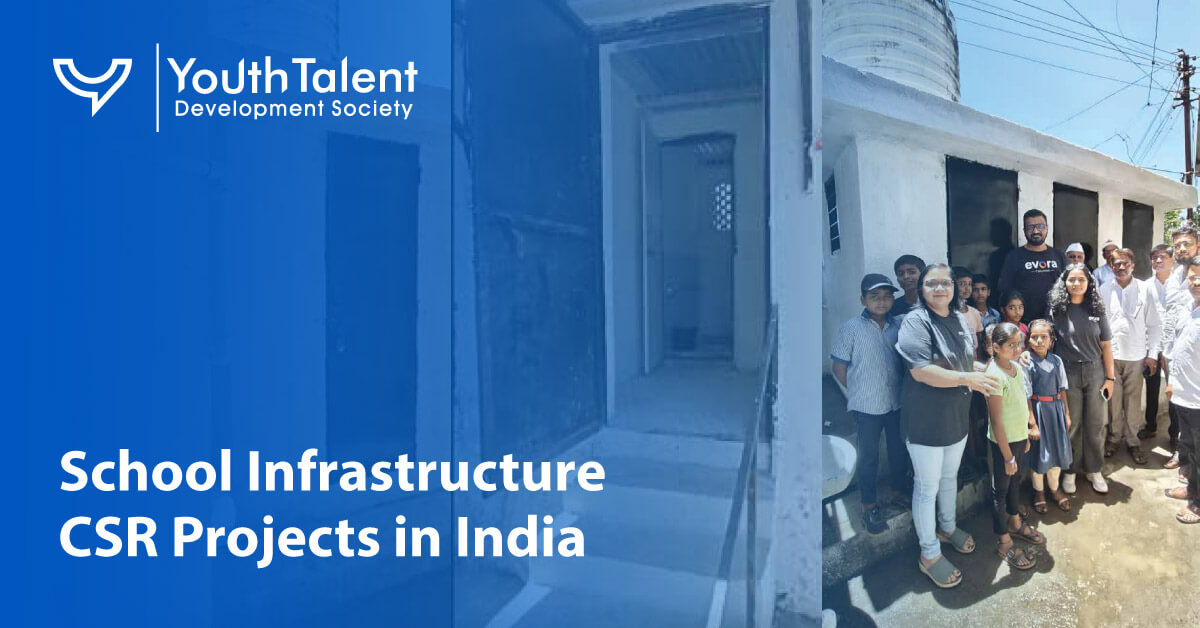
A school may have committed teachers and motivated students, but learning becomes difficult when classrooms are unsafe, drinking water is unreliable, toilets are unusable, electricity is inconsistent, or students do not have access to basic learning facilities.
This is where well-planned school infrastructure CSR projects in India can create meaningful value.
For companies, however, improving school infrastructure should not simply mean donating equipment, painting classrooms, or installing facilities without understanding what the school actually needs.
The stronger approach is to identify infrastructure gaps, prioritise improvements that affect students and teachers most, plan for maintenance, and track whether the facilities remain functional after the project is completed.
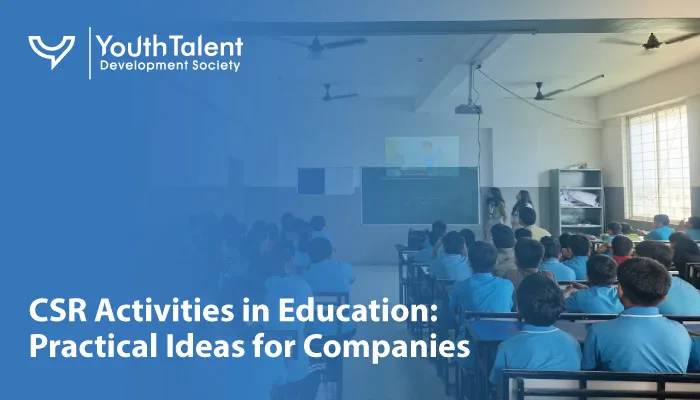
Companies exploring broader CSR activities in education can therefore treat infrastructure development as one part of a larger education strategy rather than as an isolated donation.
This guide explains what companies should assess, which school infrastructure areas may deserve priority, how projects can be implemented, and what should be measured after completion.
What Are School Infrastructure CSR Projects?
School infrastructure CSR projects are corporate-supported initiatives designed to improve the physical, learning, digital, sanitation, safety, or accessibility infrastructure available to students and teachers.
Depending on the needs of the school, a project may include:
- Classroom renovation
- Drinking water facilities
- Toilets and sanitation improvements
- Handwashing facilities
- Electricity and lighting
- Computer labs
- Digital classrooms
- Science and STEM laboratories
- Libraries and reading spaces
- Furniture
- Accessibility improvements
- Sports or activity spaces
- Safety-related improvements
- Repairs and maintenance systems
The objective should not be to install the maximum number of assets.
The objective should be to solve the infrastructure problems that most directly affect the school’s ability to provide a safe and supportive learning environment.
That requires assessment before execution.
Why School Infrastructure Matters in Education CSR
Education outcomes are influenced by much more than textbooks and classroom teaching.
Students also need an environment in which they can attend school safely, concentrate, access learning resources, use sanitation facilities comfortably, and participate in practical or digital learning.
Poor infrastructure can create practical barriers.
For example:
- A computer lab has limited value if electricity or connectivity is unreliable.
- A new toilet block creates little long-term value if water and maintenance are not planned.
- A science laboratory may remain unused if equipment is installed without teacher orientation.
- New furniture does not solve classroom problems if the room itself requires structural repair.
- Digital equipment may become unusable without technical support or asset maintenance.
This is why companies should evaluate functionality, usage and sustainability, not only the number of assets donated.
School Infrastructure CSR vs. One-Time Donations
A donation usually focuses on providing an item.
A structured school infrastructure project focuses on solving a defined problem.
For example:
Donation approach:
Provide 20 computers.
Infrastructure project approach:
Assess student requirements, electrical capacity, room security, connectivity, teacher readiness, equipment specifications, maintenance arrangements and utilisation before establishing a computer lab.
Similarly:
Donation approach:
Provide classroom furniture.
Infrastructure project approach:
Assess classroom strength, existing furniture condition, student capacity, age groups, classroom layout and future maintenance before procurement.
The difference is planning.
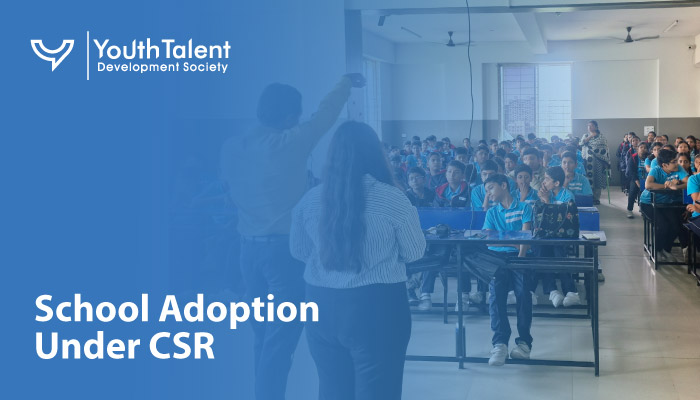
Companies that want deeper, multi-year intervention can also explore school adoption under CSR, where infrastructure improvement can be combined with student development, digital learning, mentorship and other education activities.
Start With a School Infrastructure Needs Assessment
Before allocating a budget, conduct a structured needs assessment.
The assessment should answer a simple question:
What infrastructure problem is currently limiting safety, access, teaching or learning?
A school-level assessment can review the following areas.
Building Condition
Check:
- Classroom condition
- Roofs and walls
- Flooring
- Doors and windows
- Ventilation
- Lighting
- Structural damage
- Weather protection
- Storage areas
Any serious structural or safety issue should be examined by suitably qualified professionals before work begins.
Water, Sanitation and Hygiene
Review:
- Drinking water availability
- Water quality arrangements
- Toilet availability
- Separate facilities where required
- Handwashing stations
- Water supply to toilets
- Cleaning arrangements
- Waste disposal
- Maintenance responsibility
Building a facility without ensuring that it can remain functional may result in low utilisation.
Electricity and Basic Utilities
Check:
- Electricity availability
- Wiring condition
- Lighting
- Fans
- Plug points
- Power capacity for digital equipment
- Backup requirements where relevant
Utilities should be assessed before computers, smart-classroom equipment or laboratory infrastructure is installed.
Learning Infrastructure
Review whether students have access to:
- Desks and seating
- Blackboards or teaching boards
- Libraries
- Reading spaces
- Science facilities
- Computers
- Digital learning equipment
- Educational displays
- Storage for learning material
Accessibility
Consider whether students with disabilities can safely use the school facilities.
Depending on the school and applicable requirements, this may involve:
- Ramps
- Handrails
- Accessible toilets
- Suitable pathways
- Classroom accessibility
- Appropriate signage
Accessibility should be considered during planning rather than added as an afterthought.
10 School Infrastructure Areas Companies Can Prioritize
Not every school requires the same intervention.
The following areas can help CSR teams structure their assessment.
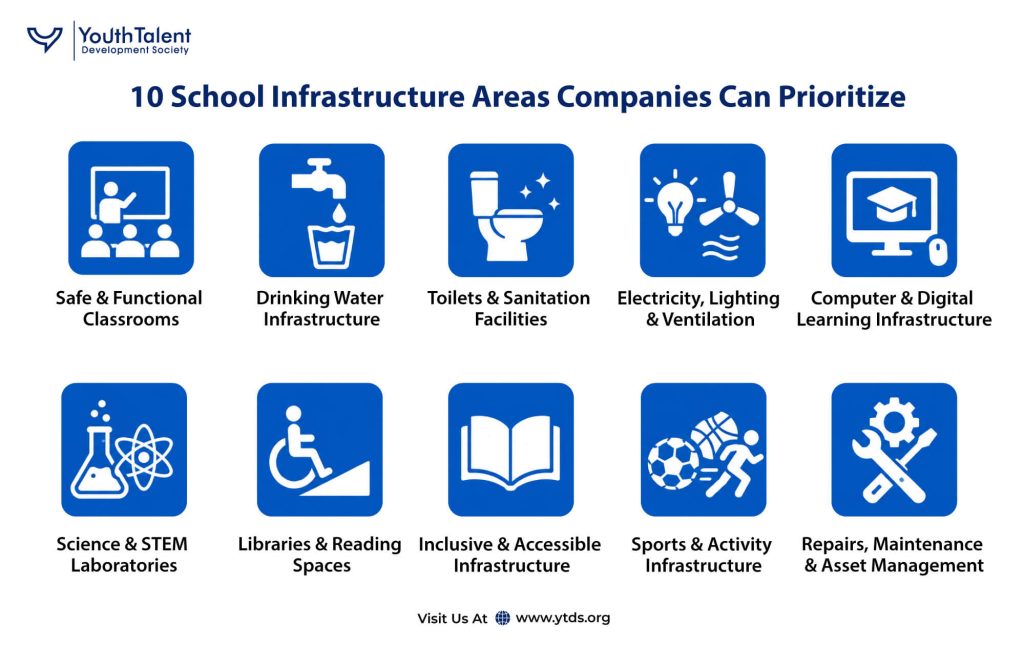
1. Safe and Functional Classrooms
A classroom is the basic learning environment.
CSR support may include:
- Repairing damaged classrooms
- Improving flooring
- Repairing doors and windows
- Improving ventilation
- Providing appropriate lighting
- Improving seating arrangements
- Providing functional desks and benches
- Creating safer storage
Before cosmetic work such as painting, companies should first identify whether there are functional or safety-related issues.
Priority question:
Does the existing classroom environment affect safety, comfort or regular teaching?
2. Drinking Water Infrastructure
Reliable access to safe drinking water is an essential school requirement.
Projects may involve:
- Water storage
- Drinking-water points
- Filtration systems where appropriate
- Pipe repairs
- Water distribution
- Regular maintenance arrangements
The implementation plan should define who will operate and maintain the facility after installation.
Do not measure only: number of units installed.
Also measure: whether students can consistently use the facility.
3. Toilets and Sanitation Facilities
Sanitation projects require more than construction.
Companies should assess:
- Existing toilet condition
- Water availability
- Privacy
- Cleaning arrangements
- Drainage
- Handwashing facilities
- Maintenance responsibilities
- Accessibility
A sanitation facility should be monitored after handover to ensure it remains usable.
4. Electricity, Lighting and Ventilation
Basic classroom conditions can affect the learning experience throughout the school day.
Depending on existing gaps, support may involve:
- Lighting
- Fans
- Safe electrical connections
- Electrical repairs
- Power capacity improvements
- Energy-efficient equipment
Electrical work should always be planned and carried out with appropriate technical and safety oversight.
5. Computer and Digital Learning Infrastructure
Digital infrastructure can expand students’ exposure to technology, but simply purchasing computers is not enough.
A sustainable digital-learning project should consider:
- Number of students
- Available room
- Electricity
- Internet connectivity
- Device security
- Software
- Teacher usage
- Technical support
- Replacement planning
- Cyber safety awareness
YTDS also works on education and digital-awareness initiatives through its broader Education programs.
Companies should connect digital infrastructure with student learning rather than treating hardware installation as the final outcome.
6. Science and STEM Laboratories
Practical science environments can support experiential learning.
Infrastructure may include:
- Laboratory furniture
- Basic science equipment
- Demonstration kits
- Storage
- Safety equipment
- STEM learning kits
- Activity stations
Before developing a laboratory, assess:
- Student age groups
- Curriculum requirements
- Teacher capacity
- Expected usage
- Equipment maintenance
- Safety procedures
The project should be designed around actual learning activities.
7. Libraries and Reading Spaces
A library does not need to be extremely large to be useful.
A school may benefit from:
- Bookshelves
- Age-appropriate books
- Reading tables
- Lighting
- Book categorisation
- Reading corners
- Basic library management
Companies can strengthen the infrastructure further by combining it with reading sessions, employee volunteering or student engagement.
8. Inclusive and Accessible Infrastructure
Infrastructure should allow as many students as possible to participate comfortably.
Depending on the school’s needs, companies can assess:
- Entrance accessibility
- Ramps
- Handrails
- Pathways
- Accessible sanitation
- Classroom movement
- Signage
Where specialist accessibility requirements exist, qualified guidance should be used.
9. Sports and Activity Infrastructure
Schools also need spaces where students can participate in physical and extracurricular activities.
Support may include:
- Basic sports equipment
- Safe play areas
- Activity zones
- Storage
- Ground improvement where feasible
The intervention should match the school’s available space, student population and ability to maintain the facility.
10. Repairs, Maintenance and Asset Management
This is one of the most overlooked areas of infrastructure CSR.
Companies often focus heavily on installation and very little on what happens afterward.
Before completing a project, define:
- Who owns the asset?
- Who will maintain it?
- What maintenance is expected?
- Who should report damage?
- Are spare parts locally available?
- What happens if equipment stops working?
- When should the project be reviewed?
Long-term functionality should be considered during the original design.
How Should Companies Decide Which Infrastructure Project to Fund?
A useful prioritisation framework is:
| Factor | Question to Ask |
|---|---|
| Safety | Does the issue create a safety risk? |
| Necessity | Is the facility essential for everyday school functioning? |
| Reach | How many students and teachers will use it? |
| Learning relevance | Will it improve access to teaching or learning? |
| Functionality | Can the infrastructure work properly in current conditions? |
| Maintenance | Can the school maintain it after handover? |
| Sustainability | Is the solution likely to remain useful over time? |
| Inclusivity | Will different groups of students be able to use it? |
| Measurement | Can usage and functionality be monitored? |
Not every project needs to score equally across all factors.
However, this framework prevents CSR decisions from being based only on what is visually impressive.
A Practical School Infrastructure CSR Implementation Process
Companies can structure the project in the following stages.
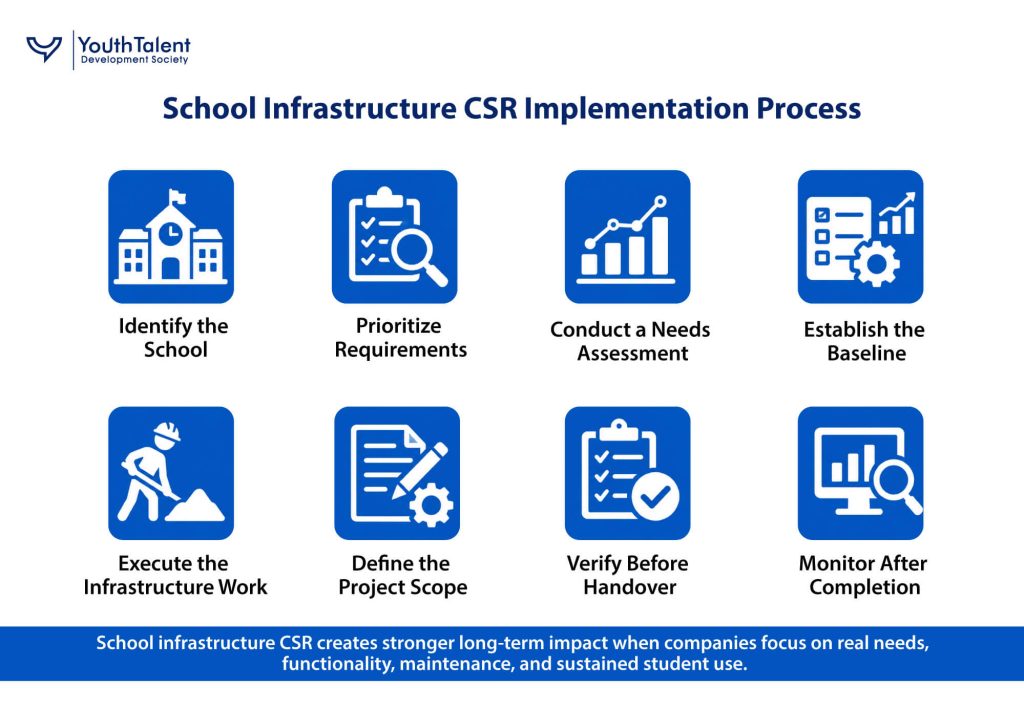
Step 1: Identify the School
Define:
- Location
- Student population
- School type
- Existing facilities
- Community context
- Initial infrastructure concerns
Step 2: Conduct a Needs Assessment
Inspect the existing infrastructure and speak with relevant school stakeholders.
Document:
- Current condition
- Urgent gaps
- Photographs
- Student usage
- Teacher requirements
- Available utilities
- Maintenance constraints
Step 3: Prioritize Requirements
Separate requirements into categories such as:
Critical: safety, sanitation, water or essential functionality
High priority: facilities that directly affect everyday learning
Developmental: facilities that expand future learning opportunities
This prevents the CSR budget from being spread across too many unrelated improvements.
Step 4: Define the Project Scope
The scope should clearly mention:
- Work to be completed
- Assets to be provided
- Beneficiaries
- Budget
- Timeline
- Responsible parties
- Permissions
- Quality expectations
- Documentation
- Maintenance arrangements
- Success indicators
Step 5: Establish the Baseline
Record the situation before implementation.
This can include:
- Before photographs
- Existing asset count
- Facility condition
- Number of students affected
- Current usage
- Functionality problems
Without a baseline, it becomes harder to demonstrate what changed.
Step 6: Execute the Infrastructure Work
Execution should include appropriate coordination among:
- Company CSR team
- School management
- Implementation partner
- Vendors or contractors
- Local stakeholders
- Technical specialists where required
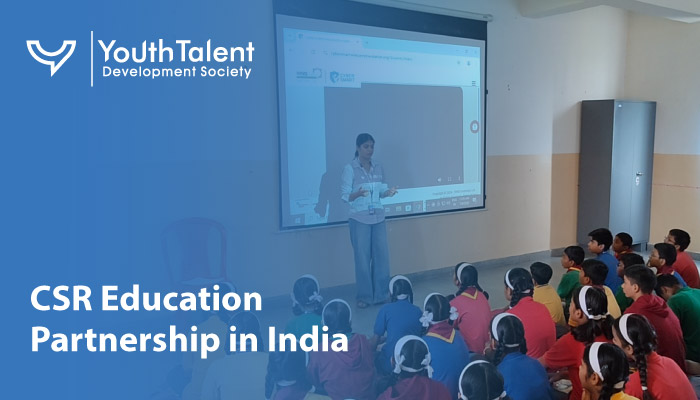
Companies working through an NGO can use a structured CSR education partnership to coordinate needs assessment, implementation, beneficiary engagement, documentation and follow-up.
Step 7: Verify Before Handover
Before declaring the project complete, verify that the infrastructure is:
- Installed correctly
- Functional
- Safe to use
- Accessible where applicable
- Documented
- Accepted by the school
- Supported by a maintenance plan
Step 8: Monitor After Completion
A follow-up visit can reveal whether the infrastructure is creating practical value.
Check:
- Is the facility being used?
- Is it still functional?
- Are students able to access it?
- Has any equipment stopped working?
- Is maintenance happening?
- Does the school need additional support?
This is how CSR moves from asset creation to sustained impact.
What Should Companies Measure?
Infrastructure projects should have measurable outputs, but the measurement framework should go beyond construction numbers.
Project Output Metrics
These may include:
- Classrooms renovated
- Toilets improved
- Drinking-water facilities installed
- Computers provided
- Libraries developed
- Laboratories established
- Desks or benches provided
- Accessibility features created
These numbers show what was delivered.
They do not automatically show whether it created impact.
Functionality Metrics
Track:
- Percentage of assets still functional
- Frequency of facility usage
- Maintenance status
- Downtime
- Repairs required
- Availability during school hours
Beneficiary Metrics
Depending on the project:
- Number of students with access
- Number of teachers supported
- Number of classes using the infrastructure
- Student participation
- Usage by different age groups
Learning or Behavioural Indicators
Where appropriate, companies may also track indicators connected to the intervention.
Examples include:
- Library usage
- Digital-learning participation
- Laboratory sessions conducted
- Student attendance patterns
- Teacher feedback
- Student feedback
Companies should avoid claiming that infrastructure alone caused improvements unless the project has a suitable evaluation design.
Common Mistakes in School Infrastructure CSR Projects
Choosing the Project Before Assessing the School
A company may decide to donate computers while the school urgently needs water, sanitation or classroom repairs.
Better approach: assess first and allocate later.
Focusing on Visibility Instead of Need
Highly visible installations are not always the most important.
A less visible repair may have greater day-to-day value for students.
Ignoring Maintenance
Infrastructure without maintenance can quickly become unusable.
Include the maintenance model in the original project plan.
Providing Equipment Without Supporting Infrastructure
Computers require electricity. Toilets require water. Laboratories require storage and trained users.
Look at the full operating environment.
Measuring Only What Was Purchased
“20 computers donated” is an output.
“Students regularly using a functional digital-learning lab” provides much stronger information about project effectiveness.
Running the Project Without School Participation
Teachers and school management understand everyday operational realities.
Their involvement helps companies identify practical requirements and avoid unnecessary assets.
School Infrastructure as Part of a Larger School Development Program
Infrastructure can create a strong foundation, but it does not need to operate in isolation.
A more comprehensive education program can combine infrastructure with:
- Student learning support
- Teacher development
- Digital literacy
- Career guidance
- Mentoring
- Cyber safety
- Skill development
- Employee volunteering
- Reading programs
- Student awareness activities
YTDS’s Each One Teach One initiative is part of its wider education work supporting students and schools.
Companies looking for long-term involvement can also combine infrastructure with a structured school-adoption model.
This allows the organisation to track development over multiple stages rather than completing one activity and leaving the school immediately afterward.
Working With an NGO for School Infrastructure CSR
School infrastructure projects involve coordination beyond procurement.
An implementation partner may help with:
- School identification
- Needs assessment
- Stakeholder coordination
- Project planning
- Beneficiary verification
- Vendor coordination
- Activity supervision
- Documentation
- Before-and-after records
- Employee volunteering coordination
- Monitoring
- Reporting
- Follow-up
Before selecting any organisation, companies should conduct appropriate due diligence.
Our guide on choosing a CSR implementation partner in India explains the broader factors companies should evaluate before starting a CSR partnership.
How YTDS Can Support Education CSR Initiatives
Youth Talent Development Society (YTDS) works across Education, Employment, Empowerment and Environment through community-focused initiatives.
For education-focused CSR programs, YTDS can work with companies and institutions to understand requirements, coordinate with beneficiaries and schools, structure activities, support on-ground implementation, document project execution and plan follow-up.
Depending on project requirements, a school-focused CSR initiative can combine infrastructure support with areas such as:
- Student development
- Digital literacy
- Learning support
- Career awareness
- Cyber safety
- Mentorship
- Employee volunteering
- School adoption
The right combination should depend on the school’s actual needs rather than following the same template for every location.
Companies exploring an education CSR initiative can contact YTDS to discuss the project requirement, location, expected beneficiaries and implementation approach.
Final Thoughts
School infrastructure CSR projects can create meaningful long-term value when companies focus on functionality rather than simply donating assets.
The strongest projects begin with a needs assessment, identify the most important gaps, define clear responsibilities, include maintenance, and continue monitoring after implementation.
A classroom renovation, drinking-water system, computer lab, library or science facility becomes valuable only when students and teachers can use it consistently.
For CSR teams, the key question should therefore not be:
“What can we donate to this school?”
It should be:
“What is preventing this school from providing a better learning environment, and what can we help improve sustainably?”
That shift can turn school infrastructure spending into a more structured, responsible and measurable education initiative.
Frequently Asked Questions
1. What is a school infrastructure CSR project?
A school infrastructure CSR project is a corporate-supported initiative that improves physical or learning facilities in a school. It may involve classrooms, sanitation, drinking water, electricity, digital infrastructure, libraries, laboratories, accessibility or other school facilities.
2. What school infrastructure can companies support through CSR?
Depending on the project, school requirements and applicable CSR framework, companies may consider classrooms, toilets, drinking-water facilities, libraries, computer labs, science laboratories, furniture, accessibility improvements and other education-supporting infrastructure.
Companies should assess the applicable CSR rules and their approved CSR plan before treating expenditure as CSR.
3. How should companies choose a school for an infrastructure project?
Companies should consider the school’s actual needs, number of students, existing facilities, urgency of the infrastructure gap, implementation feasibility, local coordination, long-term maintenance and potential impact.
4. Is building infrastructure enough for an education CSR project?
Not always.
Infrastructure should be functional, usable and maintained. In many cases, companies can create stronger outcomes by combining infrastructure with student learning, digital literacy, teacher support, mentoring or other education programs.
5. How can companies measure school infrastructure CSR impact?
Companies can track infrastructure completed, beneficiary reach, facility usage, functionality, maintenance, student and teacher feedback and relevant education indicators. Before-and-after documentation is also useful.
6. Why is maintenance important in school infrastructure CSR?
Without maintenance, facilities may stop functioning soon after installation. Maintenance responsibilities, expected costs and follow-up processes should therefore be defined before project handover.
7. Can an NGO help implement school infrastructure CSR projects?
Yes. Depending on its capabilities, an NGO or implementation partner can help identify schools, conduct needs assessments, coordinate stakeholders, supervise activities, document implementation, monitor usage and prepare impact reports.
Companies should conduct appropriate due diligence before appointing any implementation partner.
8. Can school infrastructure be combined with other education CSR activities?
Yes. Infrastructure can be combined with digital literacy, student mentoring, career guidance, libraries, teacher support, cyber safety, skill development or a longer-term school-adoption model to create a more comprehensive education initiative.