







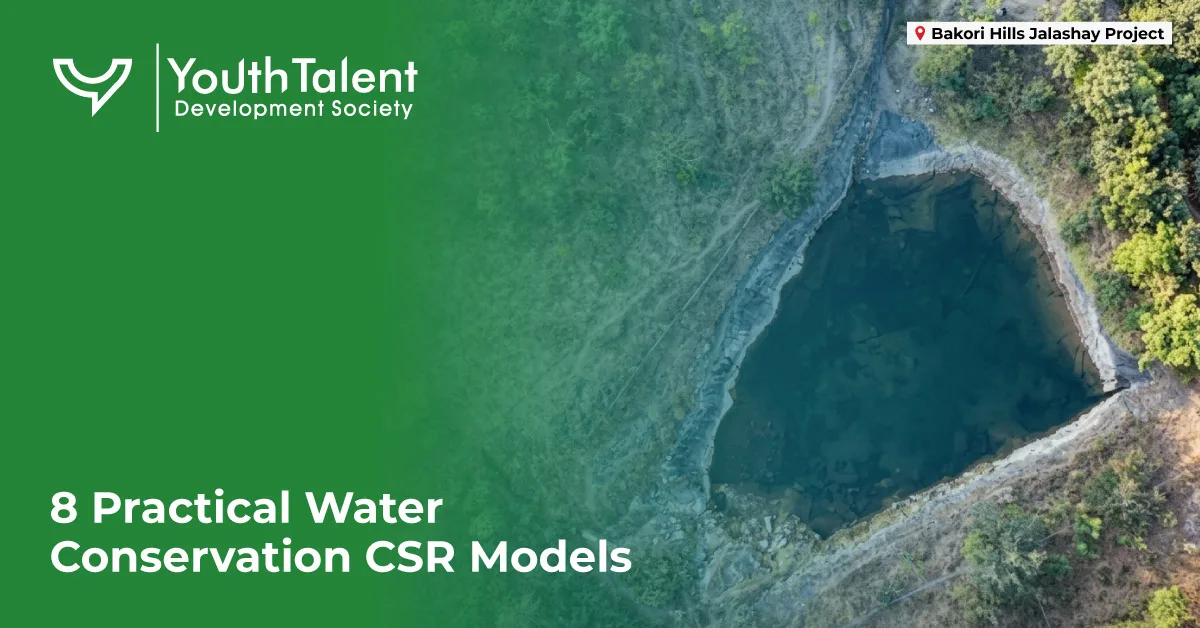
Water scarcity is not only an environmental issue. It can affect households, agriculture, schools, local livelihoods, industries and the long-term resilience of entire communities.
For companies planning environmental CSR, this makes water conservation CSR projects in India an important area to consider.
However, a meaningful water project should go beyond installing a structure or conducting a one-day awareness activity.
A rainwater harvesting system that is not maintained, a pond that is restored without understanding its catchment, or a recharge structure built at an unsuitable location may create limited long-term value.
The stronger approach is to understand the local water challenge first, select the right intervention, involve relevant stakeholders, plan maintenance and track whether the project is actually improving water availability, recharge, storage or responsible water use.
India’s water-conservation initiatives increasingly emphasise rainwater harvesting, groundwater recharge, restoration of traditional water bodies and community participation. Companies can complement these broader efforts through well-planned CSR interventions.
This guide explains practical CSR water conservation projects companies can support, how to choose the right model and what should be measured after implementation.
What Are Water Conservation CSR Projects?
Water conservation CSR projects are corporate-supported initiatives designed to conserve, harvest, recharge, restore or use water resources more sustainably.
Depending on the location and community need, projects may include:
- Rainwater harvesting
- Groundwater recharge
- Check dams
- Farm ponds
- Lake or pond restoration
- Watershed development
- Water-efficient agriculture
- School or community water conservation
- Greywater reuse awareness
- Water literacy
- Employee volunteering
- Monitoring and maintenance of water assets
The right intervention depends heavily on local conditions.
A project suitable for an urban school may be completely different from one required in a drought-prone rural community.
That is why companies should avoid selecting a water-conservation activity only because it is popular or easy to communicate.
Why Water Conservation Fits Environmental CSR
Environmental CSR should create measurable improvements rather than only visible activities.
Water conservation can contribute to several areas of community and environmental resilience, including:
- Improved rainwater capture
- Groundwater recharge
- Reduced runoff
- Restoration of local water bodies
- Better water-use awareness
- Support for agriculture
- Improved resilience during dry periods
- Community participation in natural-resource management
Water conservation also connects naturally with wider environmental work.
For example, watershed restoration may involve soil conservation and vegetation. Pond restoration may support biodiversity. Tree plantation may work better when local water availability and catchment conditions are considered.
YTDS works across environmental initiatives including plantation, ecosystem restoration and community participation through its broader Environment programs.
Companies should therefore think about water as part of the wider local ecosystem rather than as an isolated infrastructure activity.
Start With the Water Problem, Not the Project
One of the biggest mistakes in environmental CSR is deciding the intervention before understanding the problem.
For example:
Project-first approach:
“We want to build rainwater harvesting systems.”
Need-first approach:
“What is happening to rainwater in this location, where does it flow, what are the local groundwater conditions, and which intervention is technically suitable?”
Similarly:
Project-first approach:
“We want to restore a pond.”
Need-first approach:
“What caused the pond to lose storage or functionality, what is happening in the catchment, where does water enter and leave, and how will the restored water body be maintained?”
Before committing funds, companies should understand:
- Location
- Water source
- Rainfall pattern
- Existing structures
- Groundwater conditions
- Catchment
- Land ownership
- Permissions
- Community use
- Current water challenges
- Technical feasibility
- Maintenance responsibility
For technical interventions, assessments should involve suitably qualified professionals and relevant local authorities where required.
8 Practical Water Conservation CSR Projects Companies Can Support
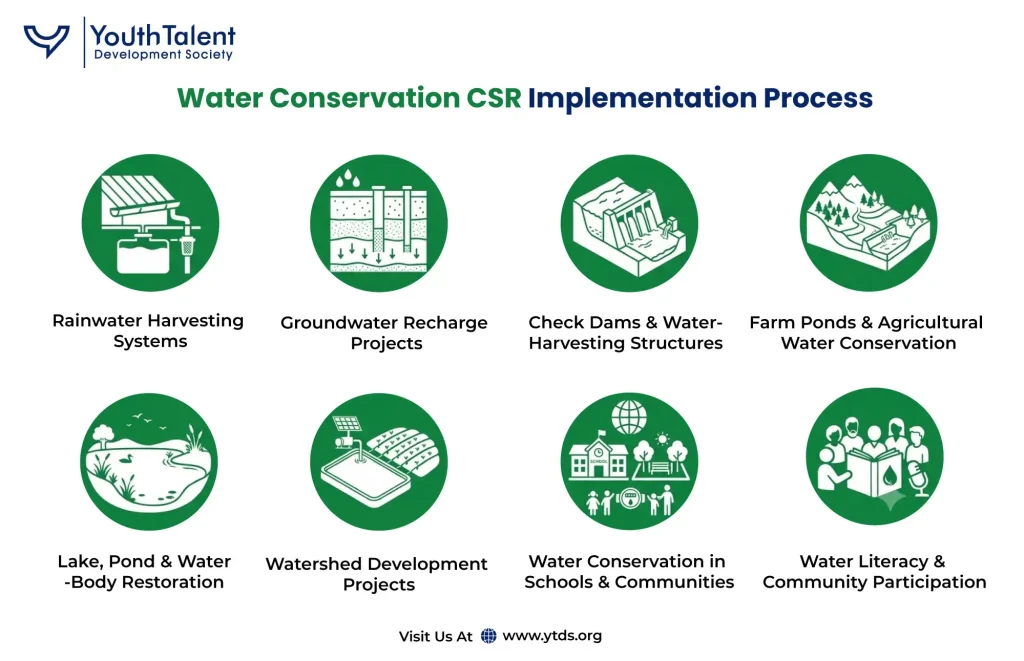
The following models can help companies identify suitable CSR opportunities.
1. Rainwater Harvesting Systems
Rainwater harvesting captures rainfall from rooftops or other suitable catchment areas and directs it toward storage or groundwater recharge.
Projects may be implemented at:
- Schools
- Community buildings
- Institutions
- Workplaces
- Residential or community facilities
- Other suitable public or social infrastructure
A project may include:
- Rooftop collection
- Gutters and pipes
- First-flush systems
- Filtration
- Storage tanks
- Recharge pits
- Recharge shafts
- Appropriate drainage connections
Before installation, companies should assess roof area, rainfall, drainage, existing water systems, soil conditions and maintenance requirements.
The objective should not simply be to say that a rainwater harvesting structure was installed.
The important question is:
Is the system actually capturing and managing rainwater effectively?
The Government of India’s Catch the Rain initiative also promotes rainwater harvesting and groundwater recharge as important water-conservation measures.
2. Groundwater Recharge Projects
Groundwater is an important source of water in many parts of India.
CSR-supported recharge initiatives may include, where technically suitable:
- Recharge pits
- Recharge shafts
- Recharge trenches
- Revival of suitable open wells
- Recharge through appropriate existing structures
- Small water-harvesting interventions
These projects require careful planning.
Companies should not assume that the same recharge structure will work everywhere.
Important factors include:
- Local geology
- Soil characteristics
- Groundwater conditions
- Runoff availability
- Water quality
- Site suitability
- Nearby contamination risks
Groundwater recharge should therefore be based on technical assessment rather than a standard design copied across locations.
3. Check Dams and Small Water-Harvesting Structures
In suitable rural or watershed locations, small water-harvesting structures can help slow runoff and retain water.
Depending on technical and local requirements, projects may include:
- Check dams
- Small bunds
- Recharge structures
- Contour-based measures
- Existing structure repair
Such interventions can potentially support groundwater recharge, soil-moisture retention and local water availability.
However, location selection matters greatly.
Companies should evaluate:
- Drainage pattern
- Catchment
- Land ownership
- Expected flow
- Soil and geological conditions
- Structural safety
- Downstream impacts
- Required permissions
- Maintenance responsibilities
Engineering structures should always be planned and executed under appropriate technical supervision.
4. Farm Ponds and Agricultural Water Conservation
Water conservation can also support agricultural communities.
Depending on local requirements, CSR programs may consider:
- Farm ponds
- Water-storage structures
- Field bunding
- Soil-moisture conservation
- Water-use awareness
- Efficient irrigation support
- Farmer training
The purpose should be to improve water management, not merely construct assets.
Before implementation, assess:
- Agricultural pattern
- Farm size
- Existing water sources
- Rainfall
- Soil conditions
- Water demand
- Farmer participation
- Long-term maintenance
Projects should also avoid encouraging unsustainable extraction simply because additional storage or recharge capacity has been created.
5. Lake, Pond and Traditional Water-Body Restoration
Many communities have existing ponds, tanks or other traditional water bodies that may have lost capacity because of siltation, waste, encroachment, damaged inlets or poor maintenance.
CSR support may involve:
- Baseline assessment
- Catchment mapping
- Desilting where technically justified
- Inlet or outlet improvement
- Waste removal
- Bank stabilisation
- Native vegetation
- Community awareness
- Protection measures
- Maintenance planning
Restoration should not mean simply making a water body look cleaner.
Companies should understand:
Where does its water come from?
Why did the water body deteriorate?
Will the problem return after restoration?
How will pollution or dumping be prevented?
Who will maintain the site?
A well-planned restoration project considers the full water system around the site.
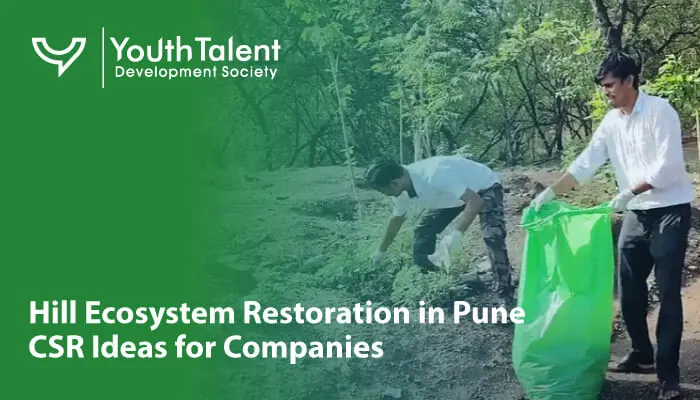
This ecosystem-based thinking is similar to the approach required in hill ecosystem restoration, where cleanup, vegetation, biodiversity and long-term site management need to work together.
6. Watershed Development Projects
A watershed is the land area from which rainfall drains toward a common water body, stream or outlet.
Watershed-focused CSR can combine several interventions instead of building one isolated structure.
Projects may include:
- Runoff management
- Soil conservation
- Recharge structures
- Vegetative measures
- Water-body restoration
- Agricultural water management
- Community planning
This approach can be especially useful when the water challenge affects a wider landscape rather than one building or village asset.
A watershed project should begin with:
- Landscape assessment
- Drainage understanding
- Community consultation
- Existing water-asset mapping
- Technical prioritisation
- Phased implementation
Companies should avoid scattering structures across locations without understanding how water moves through the landscape.
7. Water Conservation in Schools and Communities
Not every water project needs to be a large civil-work intervention.
Schools and communities can also be important locations for practical water conservation.
Companies can support:
- Rainwater harvesting
- Water-use audits
- Leak identification
- Water-saving awareness
- Student water clubs
- Demonstration models
- Community workshops
- Water-body cleanup awareness
- Responsible water-use campaigns
Combining infrastructure with education can help users understand why the intervention matters and how it should be maintained.
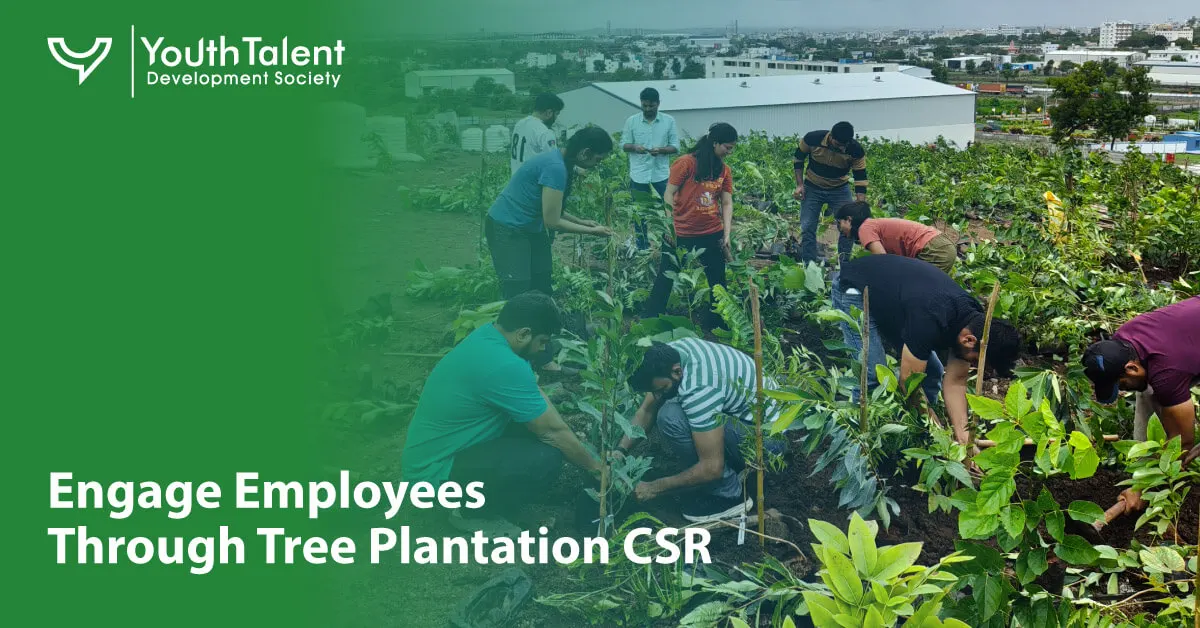
Companies can also involve employees through structured corporate employee volunteering programs for awareness activities, cleanups, community engagement and environmental education.
However, employee volunteering should support a properly planned project rather than substitute for technical expertise.
8. Water Literacy and Community Participation Programs
Infrastructure alone does not always change water-use behaviour.
Community participation can help improve:
- Awareness
- Asset ownership
- Maintenance
- Responsible consumption
- Reporting of damage
- Local monitoring
CSR programs may include:
- Water-literacy sessions
- School awareness
- Household awareness
- Farmer engagement
- Community meetings
- Volunteer campaigns
- Demonstration activities
- Local water-resource mapping
The strongest programs connect awareness with a practical local issue.
For example, a community near a restored pond can learn why waste dumping affects the water body.
A school with rainwater harvesting can involve students in understanding how rainfall is captured.
Farmers participating in a recharge or watershed project can be involved in discussions around water use and maintenance.
This helps turn infrastructure into a community-supported conservation initiative.
How Should Companies Choose the Right Water Conservation Project?
Companies can use a simple decision framework before approving an intervention.
| Factor | Question to Ask |
|---|---|
| Water problem | What specific water issue are we trying to solve? |
| Location | Is the proposed intervention appropriate for the local conditions? |
| Technical feasibility | Has the project been assessed by competent technical professionals? |
| Beneficiaries | Who will directly or indirectly benefit? |
| Permissions | Are land ownership and required approvals clear? |
| Sustainability | Can the intervention remain functional over time? |
| Maintenance | Who will maintain the structure or site? |
| Community participation | Are local stakeholders involved? |
| Measurement | Can water-related outcomes be monitored? |
| Environmental impact | Could the intervention unintentionally affect the surrounding ecosystem? |
A project should not be selected only because it offers attractive photographs or easy participation.
The intervention should address a genuine local need.
A Practical Water Conservation CSR Implementation Process
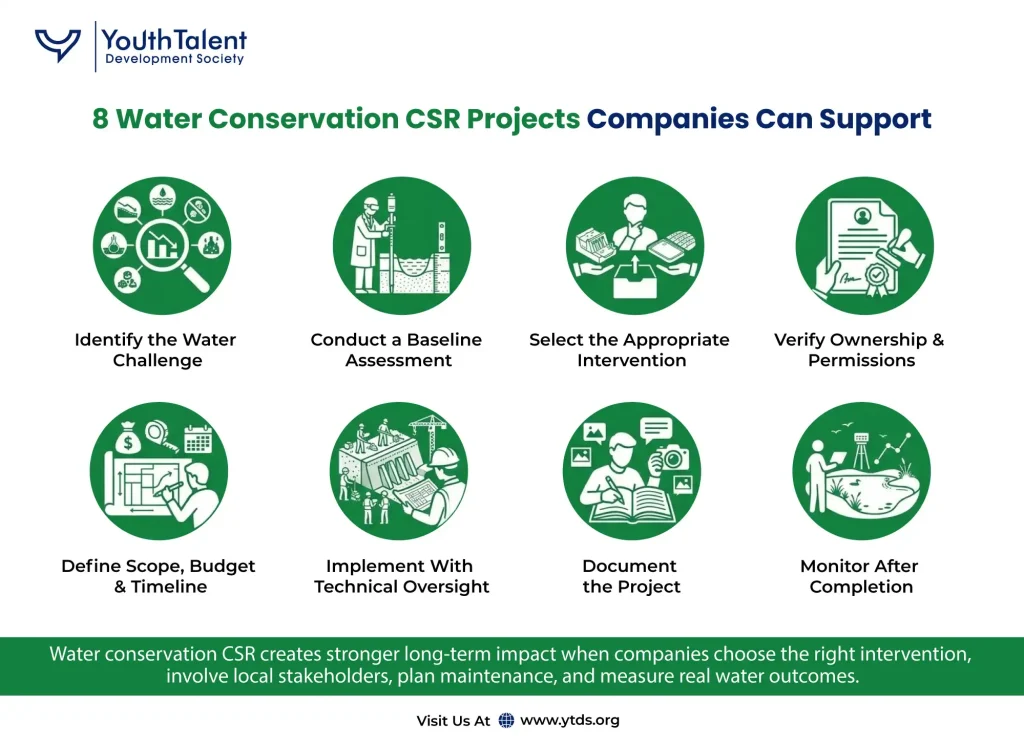
A structured project can be divided into the following stages.
Step 1: Identify the Water Challenge
Clearly define the issue.
Examples:
- Rainwater is being lost as runoff
- Groundwater levels are under pressure
- A traditional pond has deteriorated
- A school has no rainwater-harvesting system
- A rural community needs better water-resource management
- Agricultural water use requires improvement
Avoid using a broad objective such as:
“Improve water sustainability.”
Instead, define the actual problem the project will address.
Step 2: Conduct a Baseline Assessment
Record the situation before intervention.
Depending on the project, this may include:
- Existing structures
- Water sources
- Site photographs
- Catchment information
- Usage
- Storage condition
- Existing maintenance
- Beneficiary information
- Seasonal conditions
For technically complex projects, baseline assessment should be supported by relevant professionals.
Step 3: Select the Appropriate Intervention
Use the assessment to determine whether the need calls for:
- Rainwater harvesting
- Recharge
- Water-body restoration
- Watershed treatment
- Agricultural water management
- Awareness
- Or a combination of interventions
Do not force every location into the same CSR model.
Step 4: Verify Ownership and Permissions
Before physical work begins, confirm:
- Land ownership
- Access
- Local permissions
- Relevant authority involvement
- Long-term use
- Maintenance responsibility
This is especially important for water bodies, public land and community infrastructure.
Step 5: Define Scope, Budget and Timeline
The project plan should specify:
- Activities
- Technical scope
- Locations
- Beneficiaries
- Budget
- Timeline
- Implementation responsibility
- Monitoring
- Documentation
- Maintenance
- Success indicators
Clear scope reduces confusion during execution.
Step 6: Implement With Technical Oversight
Water-related civil or ecological work should be executed according to the project’s technical requirements.
Implementation may involve:
- CSR team
- NGO or implementation partner
- Engineers or technical specialists
- Local authorities
- Community representatives
- Vendors
- Employee volunteers where appropriate
Companies considering NGO-led execution should evaluate the organisation’s capacity carefully. YTDS’s guide on selecting a CSR implementation partner in India explains the broader due-diligence and execution factors companies should review.
Step 7: Document the Project
Documentation can include:
- Before photographs
- Work-in-progress photographs
- Completion photographs
- Location details
- Beneficiary information where appropriate
- Technical records
- Activity records
- Volunteer participation
- Challenges
- Maintenance plan
Documentation should help the CSR team understand what actually happened on the ground.
Step 8: Monitor After Completion
Completion should not be the end of the project.
Follow-up should check:
- Is the structure functional?
- Is rainwater reaching the system?
- Is the water body being maintained?
- Has waste returned?
- Are local users participating?
- Are repairs required?
- Are expected water-management benefits visible?
- Is the intervention being used as intended?
The follow-up period should reflect the type of project and seasonal conditions.
What Should Companies Measure in Water Conservation CSR?
Water projects should not be evaluated only through expenditure or structures completed.
Different projects require different indicators.
Output Metrics
Companies may track:
- Rainwater harvesting systems installed
- Recharge structures created
- Water bodies restored
- Check dams constructed or repaired
- Farm ponds supported
- Villages or schools covered
- Employees volunteered
- Community participants reached
These show what was delivered.
Functionality Metrics
Track whether the intervention continues to work.
Examples:
- Structures functioning
- Maintenance completed
- Inlets and outlets clear
- Water-harvesting systems operational
- Restored sites free from renewed dumping
- Repairs completed
Water-Related Outcome Metrics
Depending on technical feasibility and the project design, companies may consider measuring:
- Estimated harvesting or storage capacity
- Water retained or captured
- Recharge potential
- Seasonal water availability
- Groundwater-level observations
- Reduction in runoff
- Area treated under watershed work
- Irrigation or agricultural benefits
Companies should avoid making precise recharge or groundwater-impact claims unless the measurement method can support them.
Community Metrics
These can include:
- Beneficiaries reached
- Households involved
- Farmers participating
- Schools covered
- Awareness participants
- Local groups involved in maintenance
- Feedback collected
Environmental Metrics
For ecosystem-related projects, companies may also examine:
- Vegetation condition
- Erosion reduction
- Water-body condition
- Waste recurrence
- Habitat improvement
- Native planting where relevant
Measurement should match the intervention rather than using the same CSR dashboard for every water project.
Common Mistakes in Water Conservation CSR Projects
Building Structures Without a Technical Assessment
A recharge pit or check dam is not automatically suitable everywhere.
Better approach: assess the site and design the intervention according to local conditions.
Treating Project Completion as Impact
A structure can be completed and still fail to deliver meaningful benefit.
Better approach: monitor functionality after implementation.
Ignoring the Catchment
Restoring a pond without understanding where water enters the system may create only cosmetic improvement.
Better approach: assess the surrounding catchment and causes of degradation.
No Maintenance Plan
Silt, waste, damaged components or blocked channels can reduce project effectiveness.
Better approach: assign clear maintenance responsibility before handover.
No Community Involvement
Infrastructure that local stakeholders do not understand or own may be difficult to sustain.
Better approach: involve relevant users in planning, awareness and maintenance.
Making Unsupported Impact Claims
A company should not automatically claim that a structure recharged a specific quantity of groundwater or solved local water scarcity.
Better approach: report what was measured and clearly distinguish outputs, estimates and verified outcomes.
Choosing Projects Mainly for Visibility
Water conservation is highly site-specific.
The most photogenic project is not always the project a community needs.
Better approach: let the baseline assessment drive project selection.
How Employee Volunteering Can Support Water Conservation CSR
Employee volunteering can complement water-conservation programs when activities are safe and appropriate.
Employees may participate in:
- Water-literacy campaigns
- School awareness sessions
- Community awareness
- Cleanup activities
- Water-resource mapping support
- Environmental volunteering
- Documentation
- Citizen engagement
Technical work such as structural design, excavation, recharge planning or engineering should remain with qualified professionals.
The goal is to use volunteering where people participation adds value.
This approach also connects with YTDS’s wider work on corporate employee volunteering in India.
Water Conservation and Ecosystem Restoration Should Work Together
Water, soil, vegetation and biodiversity are connected.
For example:
- Excessive runoff can contribute to erosion.
- Poor vegetation can affect soil stability.
- Degraded water bodies can reduce habitat quality.
- Restoration work may fail if the surrounding catchment continues to deteriorate.
Companies should therefore explore whether a water project needs to be connected with:
- Soil conservation
- Native vegetation
- Biodiversity protection
- Hill restoration
- Community stewardship
YTDS has used a similar integrated environmental approach in its work around hill ecosystem restoration.
This helps environmental CSR move beyond isolated activities toward landscape-level thinking.
How YTDS Can Support Environmental CSR Programs
Youth Talent Development Society works across four focus areas: Environment, Empowerment, Education and Employment.
Under Environment, YTDS supports community-focused environmental initiatives and corporate engagement programs.
Depending on project requirements and technical partnerships, YTDS can support companies with areas such as:
- Community and site coordination
- Environmental awareness
- Employee volunteering
- School environmental education
- Local stakeholder mobilisation
- Cleanup and restoration activities
- Plantation and ecosystem initiatives
- Project documentation
- Participation tracking
- Impact reporting
- Follow-up coordination
For specialised water-conservation infrastructure, the project should involve the appropriate technical expertise, permissions and site assessments.
YTDS can help companies structure environmental CSR around real local needs while coordinating participation, execution support, documentation and follow-up.
Companies interested in environmental CSR programs can contact YTDS to discuss the project location, objectives, beneficiaries and implementation requirements.
Final Thoughts
Water conservation CSR projects can create meaningful environmental and community value when companies begin with the local problem rather than a predefined activity.
Rainwater harvesting, groundwater recharge, pond restoration, watershed development and community water programs can all be useful—but only when they are appropriate for the site, technically sound and maintained after completion.
For CSR teams, the most useful question is not:
“Which water conservation project should we sponsor?”
It is:
“What is the water challenge in this location, what intervention is appropriate, and how will we know whether it continues to work?”
That shift moves water CSR from asset creation toward responsible, measurable and long-term water conservation.
Frequently Asked Questions
1. What are water conservation CSR projects?
Water conservation CSR projects are corporate-supported initiatives designed to conserve water, capture rainfall, recharge groundwater, restore water bodies, improve water-use practices or strengthen community water management.
2. What are some water conservation CSR activities companies can support?
Depending on local needs and technical feasibility, companies may support rainwater harvesting, groundwater recharge, check dams, farm ponds, watershed development, water-body restoration, school water programs, water literacy and community awareness.
3. Is rainwater harvesting suitable for every CSR project?
No. Rainwater harvesting should be selected based on factors such as rainfall, catchment area, building or site conditions, drainage, soil characteristics, groundwater conditions and maintenance capacity.
4. How can companies measure the impact of water conservation projects?
Companies can track project outputs, functionality, estimated water-harvesting or storage capacity, maintenance, beneficiaries, community participation and technically measurable water-related outcomes. Measurement methods should match the type of intervention.
5. Why is maintenance important in water conservation CSR?
Water structures can lose effectiveness if they become damaged, blocked by silt or waste, or are not maintained. A clear maintenance plan helps keep the intervention functional after project completion.
6. Can employees participate in water conservation CSR activities?
Yes. Employees can support awareness programs, community engagement, cleanup activities, environmental education and appropriate volunteering. Technical design and engineering work should be handled by qualified professionals.
7. Can companies restore ponds and lakes through CSR?
Companies may support appropriate water-body restoration projects subject to project eligibility, land ownership, permissions, technical requirements and applicable CSR rules. Restoration should consider the full catchment and long-term maintenance rather than only cosmetic cleanup.
8. Can NGOs help implement water conservation CSR projects?
Yes. NGOs can support community mobilisation, site coordination, awareness, implementation management, volunteering, documentation and follow-up. Projects involving specialised technical or engineering work should also involve appropriate experts.