







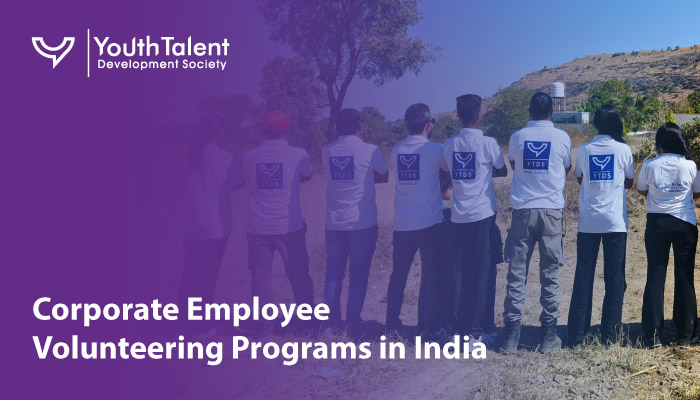
Corporate employee volunteering programs in India are becoming an important way for companies to connect employee engagement with meaningful social impact.
For many organisations, CSR is no longer limited to funding projects. Companies also want their employees to participate, contribute skills, volunteer time, and engage directly with communities. When planned well, employee volunteering can support education, environment, youth development, women empowerment, community awareness, and local social impact programs.
For NGOs like YTDS, corporate volunteering creates a strong bridge between companies and communities. It helps employees experience ground-level impact while supporting structured programs across Environment, Empowerment, Education, and Employment.
However, employee volunteering should be planned carefully. Companies can use volunteering as part of their broader CSR and employee engagement strategy, but they should evaluate CSR expenditure treatment as per applicable CSR rules and professional guidance.
What Are Corporate Employee Volunteering Programs?
Corporate employee volunteering programs are structured activities where company employees participate in social impact initiatives with NGOs, schools, communities, or local institutions.
These programs may include:
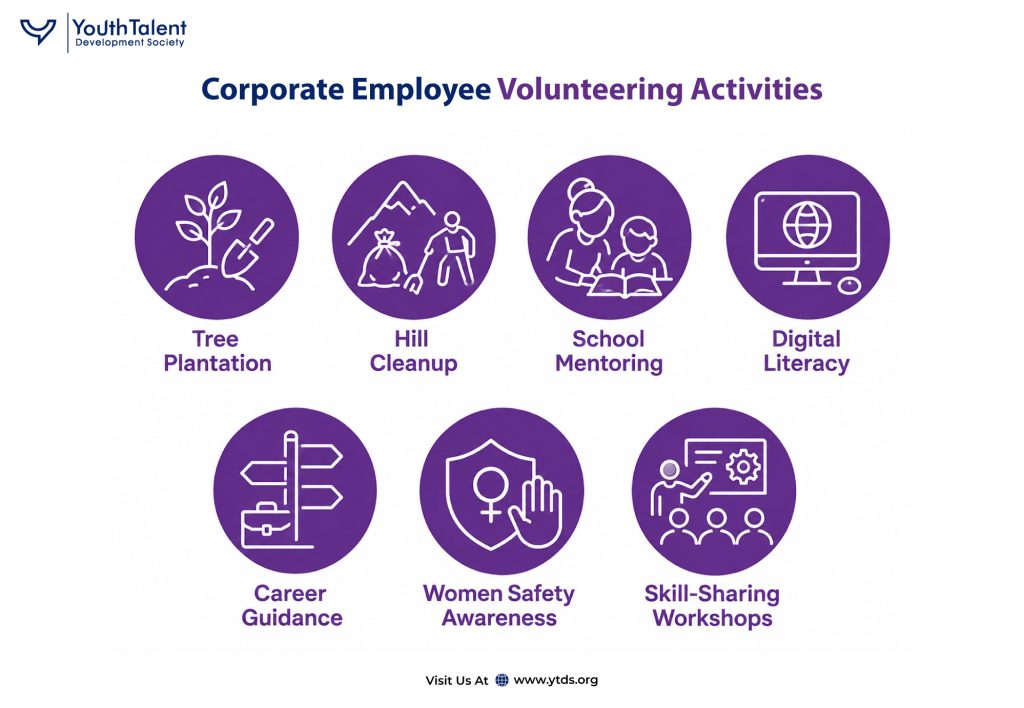
- Tree plantation drives
- Hill cleanup activities
- School mentoring sessions
- Digital literacy workshops
- Career guidance sessions
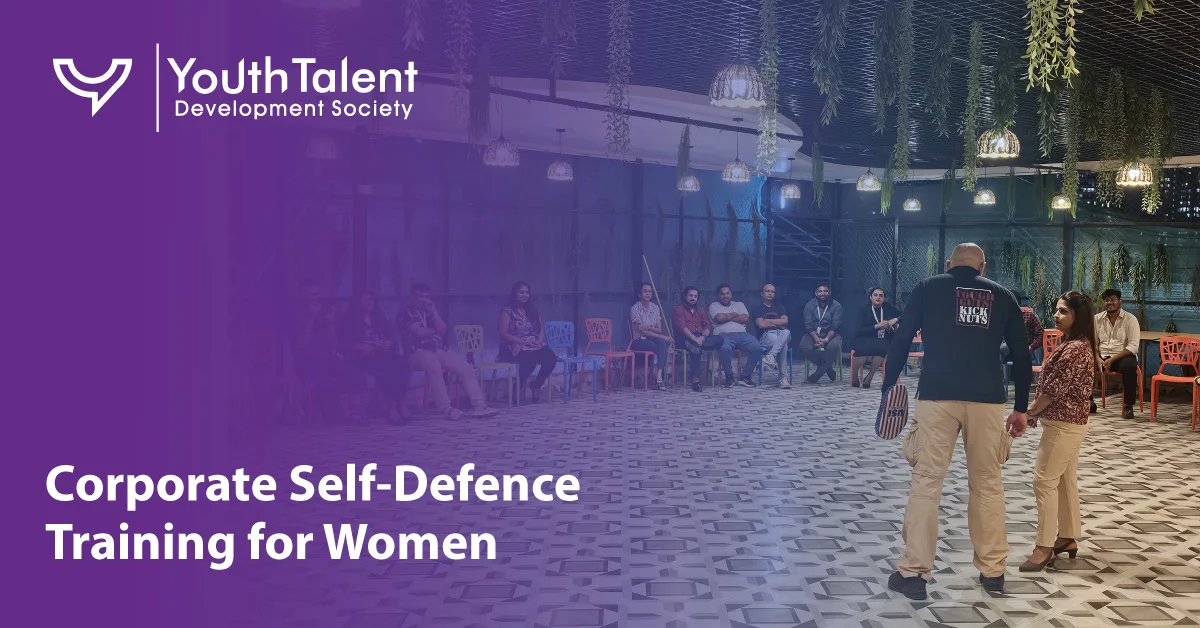
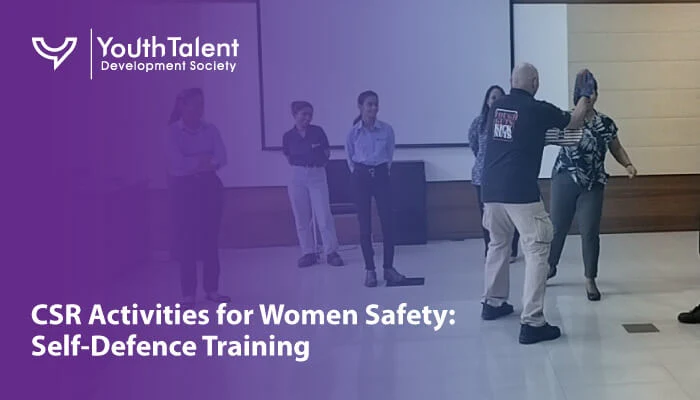
- Women safety awareness programs
- Skill-sharing workshops
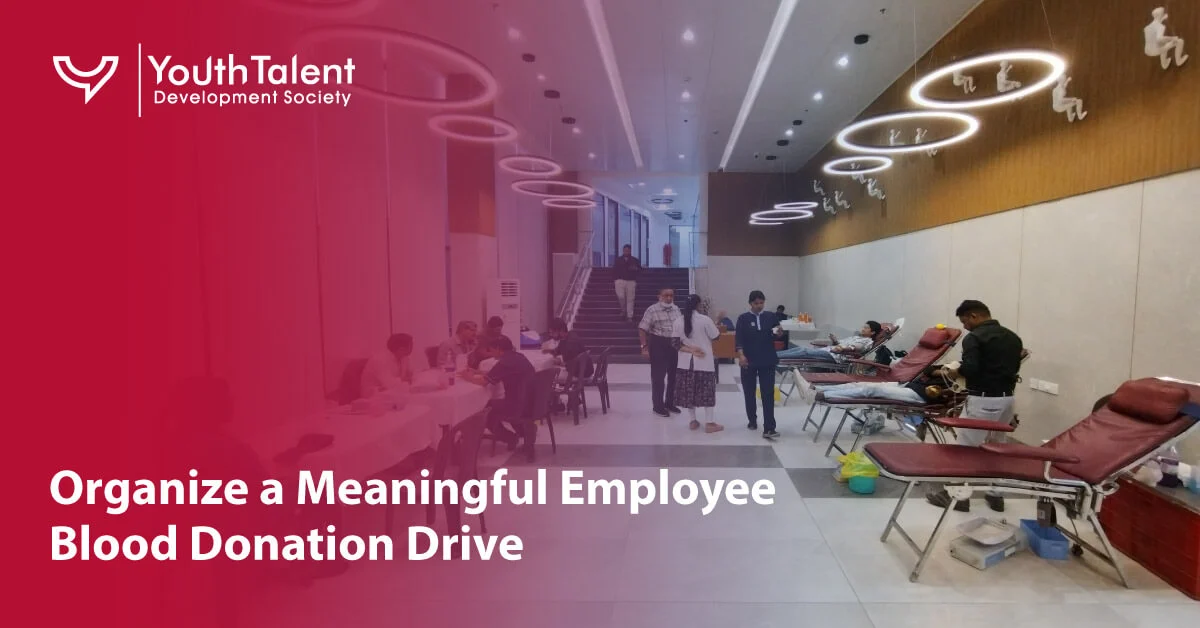
- Blood donation awareness drives
- Community cleanliness activities
- Student interaction programs
The purpose is to involve employees in meaningful work that benefits society while also improving team engagement and workplace culture.
Why Companies in India Are Building Employee Volunteering Programs
Companies in India are increasingly looking for volunteering programs because they create value for both employees and communities.
For employees, volunteering provides a chance to contribute beyond regular work. It builds empathy, teamwork, leadership, communication, and social awareness.
For companies, volunteering supports employee engagement, employer branding, CSR visibility, and community relationships.
For communities, volunteering brings access to professional skills, mentoring, awareness, resources, and hands-on support.
Under Schedule VII of the Companies Act, 2013, eligible CSR areas include promoting education, employment-enhancing vocational skills, promoting gender equality and empowering women, and ensuring environmental sustainability. These areas naturally connect with many volunteering-led programs, but companies should not automatically assume employee volunteering time itself qualifies as CSR expenditure without proper review.
10 Practical Employee Volunteering Activities for Companies in India
1. Tree Plantation Volunteering Drives
Tree plantation is one of the most common and visible employee volunteering activities. Companies can involve employees in plantation drives, sapling distribution, site preparation, awareness activities, and post-plantation monitoring.
For stronger impact, plantation volunteering should include proper species selection, site planning, maintenance, geo-tagged proof, and survival tracking.
This can connect well with environment CSR and employee engagement.
Companies can also involve employees in seedball preparation and ecological restoration activities through YTDS’s Seed The Future initiative, especially for locations where traditional plantation may be difficult.
2. Hill Cleanup and Biodiversity Protection Activities
For companies looking for environment-focused volunteering, hill cleanup drives and biodiversity protection activities can be meaningful.
Employees can participate in:
- Waste collection
- Trail cleanup
- Plastic removal
- Awareness activities
- Native plantation support
- Biodiversity documentation
- Community education
Such programs are especially relevant for cities where hills, open spaces, and natural ecosystems need public participation and long-term care.
3. School Mentoring Sessions
Employee volunteers can support students through mentoring sessions. These sessions may cover confidence building, career awareness, communication skills, basic life skills, and future planning.
Mentorship is especially useful because students get exposure to working professionals and real-world career paths.
Companies can plan one-time mentoring sessions or structured monthly mentoring programs with NGO support.
4. Digital Literacy Workshops
Digital literacy is a highly practical volunteering activity. Employees can help students, youth, or community members understand basic digital tools.
Topics may include:
- Basic computer use
- Internet safety
- Email communication
- Online learning tools
- Digital payments awareness
- Responsible smartphone usage
This type of volunteering is useful for education, employment readiness, and digital inclusion.
5. Cyber Safety Awareness for Students
As students use smartphones and the internet more frequently, cyber safety awareness has become important.
Employee volunteers can support awareness sessions on:
- Online privacy
- Strong passwords
- Cyberbullying
- Social media safety
- Online scams
- Safe digital behaviour
This is a strong activity for companies that want to contribute to student safety and responsible digital learning.
6. Career Guidance and Employability Sessions
Companies can involve employees in career guidance programs for students and youth.
Volunteers can help with:
- Resume writing
- Interview preparation
- Communication skills
- Workplace readiness
- Career path awareness
- Professional behaviour
- LinkedIn profile basics
This connects directly with youth employment and skill development.
7. Skill-Sharing Workshops
Employees have practical knowledge that can help students, youth, women, and communities.
Skill-sharing workshops may include:
- Excel basics
- Communication skills
- Financial literacy
- Basic entrepreneurship
- Digital marketing basics
- Presentation skills
- Workplace discipline
- Customer service skills
These sessions can be planned as short workshops or longer training modules.
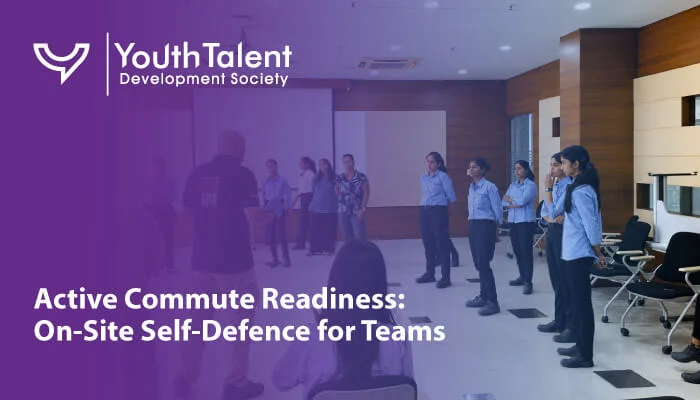
8. Women Safety and Empowerment Volunteering
Companies can support women-focused community programs through employee volunteering.
Activities may include:
- Women safety awareness
- Self-defence awareness support
- Digital safety for women
- Health and hygiene awareness
- Confidence-building sessions
- Mentorship for girls and young women
- Career guidance for women
This connects strongly with the Empowerment pillar of YTDS.
9. Blood Donation Awareness and Support Drives
Companies can organise employee volunteering around blood donation awareness and support activities.
Employees can help with awareness, donor mobilisation, registration support, communication, and event coordination. Companies planning a structured activity can also refer to our guide on organising a corporate blood donation drive in India.
This type of volunteering is useful because it creates immediate community value and encourages responsible participation.
10. Community Awareness Campaigns
Employee volunteering can also support awareness campaigns around health, hygiene, environment, education, road safety, digital safety, and social responsibility.
These programs are useful because they can be implemented in schools, communities, colleges, housing societies, and local institutions.
How Employee Volunteering Supports CSR and Employee Engagement
Corporate volunteering works well because it connects two important objectives: social responsibility and employee engagement.
From a CSR perspective, volunteering helps companies participate more actively in community programs. From an HR perspective, volunteering creates team bonding, purpose-driven engagement, leadership exposure, and employee pride.
A well-planned volunteering program can help companies:
- Build stronger employee engagement
- Improve team collaboration
- Create social impact stories
- Support local communities
- Strengthen employer branding
- Connect employees with purpose-led work
- Build long-term NGO partnerships
The National CSR eXchange Portal also positions itself as a platform connecting corporates, beneficiaries, and implementing agencies, showing the importance of structured NGO-corporate collaboration in CSR projects.
Working With an NGO for Corporate Employee Volunteering
Companies may have employees who are ready to volunteer, but effective programs still require community coordination, beneficiary access, logistics, materials, documentation and follow-up. An experienced NGO implementation partner can help turn the volunteering idea into a structured activity that is practical for both employees and the community.
The partner can also help companies coordinate with schools or communities, manage on-ground execution, collect participation records and support basic impact reporting without turning the volunteering program into a one-day event.
How to Plan a Corporate Employee Volunteering Program
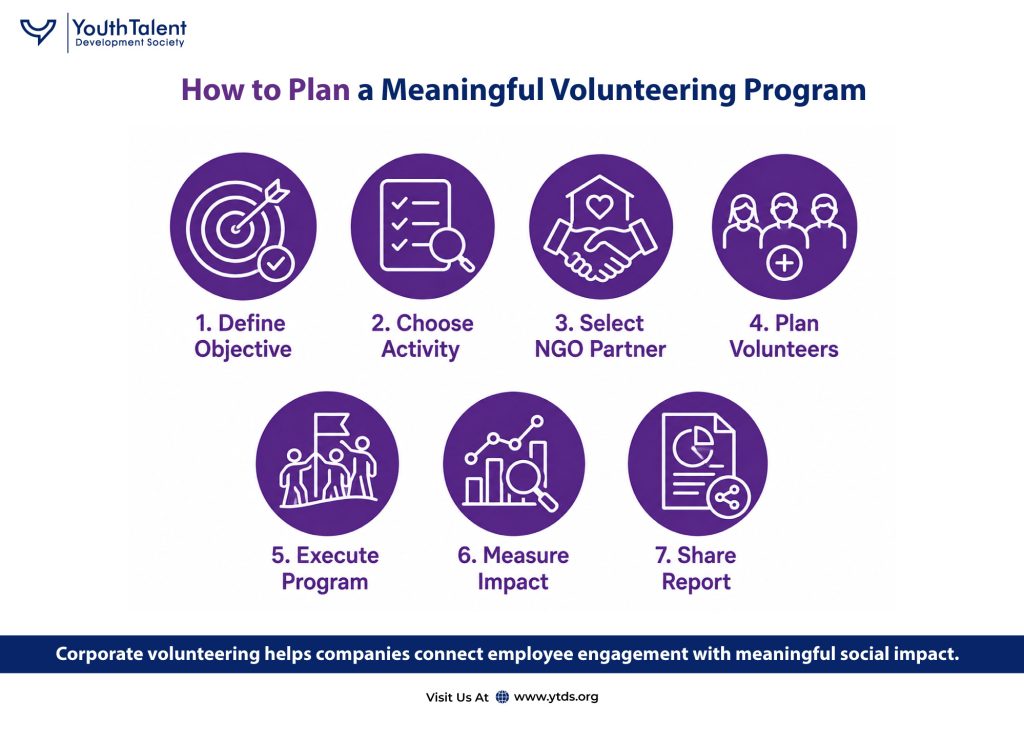
A meaningful volunteering program should not be random. It should be planned around the company’s CSR focus, employee skills, available time, and community needs.
Companies can follow this basic process:
1. Define the Objective
First, decide what the program should achieve.
Examples:
- Improve digital literacy
- Support school students
- Engage employees in plantation
- Create women safety awareness
- Support youth employability
- Promote community health or safety
2. Select the Right Activity
The activity should match both employee interest and community need.
For example, IT employees may be useful for digital literacy or cyber safety sessions. HR teams may be useful for career guidance and interview preparation. General employee groups may be suitable for tree plantation, cleanup drives, or awareness campaigns.
3. Choose an NGO Partner
An NGO partner can help convert the idea into an executable plan. The partner can identify beneficiaries, coordinate logistics, manage permissions, and ensure the activity is relevant.
4. Prepare the Volunteer Plan
The plan should include:
- Date and time
- Location
- Volunteer count
- Activity format
- Materials required
- Safety instructions
- Roles and responsibilities
- Reporting requirements
5. Execute and Document
During execution, companies should ensure proper attendance, photos, videos, feedback, and basic impact data are collected.
6. Measure and Follow Up
After the activity, the company and NGO should review the outcomes and decide whether the activity should continue as a one-time, quarterly, or long-term volunteering program.
How to Measure the Impact of Employee Volunteering
Employee volunteering should be measured beyond participation numbers.
Useful impact metrics include:
- Number of employees volunteered
- Volunteer hours contributed
- Number of beneficiaries reached
- Number of sessions conducted
- Number of schools or communities supported
- Student/youth participation
- Women participants reached
- Saplings planted or cleanup area covered
- Awareness material distributed
- Feedback from participants
- Photos and documentation
- Follow-up actions completed
For stronger reporting, companies should also track whether the volunteering activity created learning, awareness, behaviour change, or long-term engagement.
How YTDS Can Support Corporate Employee Volunteering Programs
YTDS can support companies in designing and executing meaningful corporate employee volunteering programs across its 4E model: Environment, Education, Employment, and Empowerment.
Under Environment, YTDS can support tree plantation drives, hill cleanup activities, biodiversity awareness, and employee-led green CSR activities.
Under Education, YTDS can support school engagement, digital literacy, cyber safety awareness, student mentoring, and learning support programs.
Under Employment, YTDS can support skill-sharing workshops, career guidance, employability sessions, resume-building, and interview preparation for youth.
Under Empowerment, YTDS can support women safety awareness, self-defence training support, mentorship, community awareness, and social inclusion programs.
This makes YTDS a suitable NGO partner for companies that want structured, meaningful, and well-documented volunteering activities.
Why Corporate Volunteering Should Be Long-Term
One-day volunteering activities are useful, but long-term volunteering creates deeper impact.
For example:
- A single digital literacy session creates awareness.
- A repeated digital literacy program builds confidence.
- A one-day mentoring session inspires students.
- A monthly mentoring program supports real development.
- A single plantation drive creates participation.
- A monitored plantation program creates environmental impact.
Companies should look at employee volunteering as a structured engagement program, not only as a one-day event.
Conclusion
Corporate employee volunteering programs in India can create meaningful social impact when they are planned with clear objectives, relevant activities, NGO coordination, and measurable outcomes.
For companies, volunteering supports employee engagement, CSR participation, employer branding, and community connection. For communities, it brings skills, awareness, resources, and long-term support.
YTDS can help companies design and execute employee volunteering programs across education, environment, employment, and empowerment initiatives.
Partner with YTDS for corporate volunteering programs that create meaningful social impact and stronger employee engagement.
FAQs
1. What are corporate employee volunteering programs?
Corporate employee volunteering programs are structured activities where company employees participate in social impact initiatives such as school mentoring, tree plantation, digital literacy, women safety awareness, skill-sharing, or community programs.
2. What are some good employee volunteering activities in India?
Good employee volunteering activities include tree plantation drives, school mentoring, digital literacy workshops, cyber safety awareness, career guidance, skill-sharing sessions, women safety programs, blood donation awareness, and community cleanup drives.
3. How do corporate volunteering programs help companies?
Corporate volunteering programs help companies improve employee engagement, team bonding, employer branding, CSR participation, and community impact.
4. Can employee volunteering be part of CSR?
Employee volunteering can support a company’s broader CSR and employee engagement strategy. However, companies should evaluate CSR expenditure treatment as per applicable CSR rules and professional guidance.
5. How should companies choose the right employee volunteering activity?
Companies should choose volunteering activities based on employee skills and interests, community needs, available time, location, safety requirements and the outcomes they want to create. For example, technology teams may support digital literacy or cyber-safety sessions, HR professionals may support career guidance, while larger employee groups may be better suited to plantation, cleanup or awareness activities.
6. How can companies measure employee volunteering impact?
Companies can measure volunteer participation, volunteer hours, beneficiaries reached, sessions conducted, feedback collected, communities supported, photos, reports, and follow-up outcomes.
7. How can YTDS support corporate volunteering programs?
YTDS can support companies with tree plantation, hill cleanup, digital literacy, cyber safety, student mentoring, youth employability, women safety, self-defence, and community awareness volunteering programs.