







Pune’s hills are more than scenic morning-walk spaces. They are urban ecosystems that support biodiversity, reduce heat stress, improve air quality, recharge local ecology, and give citizens access to open green spaces within a rapidly growing city.
From Vetal Tekdi and Hanuman Tekdi to ARAI Hills, Taljai, Baner-Pashan hills, and Bakori Hills, Pune’s hill landscapes are closely connected to the city’s environmental health. These spaces need more than occasional attention. They need structured cleanup, native plantation, biodiversity protection, citizen participation, and long-term maintenance.
This is where hill ecosystem restoration in Pune becomes an important CSR opportunity for companies.
Under Schedule VII of the Companies Act, 2013, CSR activities may include ensuring environmental sustainability, ecological balance, protection of flora and fauna, agroforestry, conservation of natural resources, and maintaining the quality of soil, air, and water. This makes hill cleanup, native plantation, biodiversity protection, and ecological restoration relevant CSR focus areas for companies in India.
For CSR teams, hill restoration is not only about cleaning waste or planting saplings. It is about protecting urban green ecosystems through planned, measurable, and community-supported action.
Why Pune’s Hills Need Restoration
Pune’s hills are under pressure from urbanisation, waste dumping, fires, invasive species, unplanned footfall, construction pressure, and lack of sustained maintenance. These issues affect vegetation, soil health, wildlife movement, and the overall public value of these green spaces.
Vetal Hill, also known as Vetal Tekdi, is one of Pune’s most recognised urban hills and is described as a prominent hill within the city limits. It is also part of the larger Vetal Hill-Mhatoba Hill complex and supports dry-deciduous vegetation, endemic plant species, and bird life.
Recent local reporting also shows that Pune citizens and environmental groups have actively raised concerns around hill conservation, especially because tekdis are among the city’s most important open green spaces.
This makes hill restoration a timely and meaningful CSR area. Instead of limiting environmental CSR to one-day plantation events, companies can support long-term restoration of hill ecosystems that directly benefit the city and its residents.
What Is Hill Ecosystem Restoration?
Hill ecosystem restoration means improving the ecological health of hill areas through cleanup, native plantation, soil care, biodiversity protection, responsible community participation, and long-term maintenance.
A good hill restoration program may include:
- Waste cleanup and plastic removal
- Segregation and responsible disposal
- Native tree plantation
- Removal or control of invasive growth, where guided by experts
- Soil and water conservation support
- Trail discipline and awareness
- Employee volunteering
- Community participation
- Geo-tagged documentation
- Follow-up visits and reporting
- Biodiversity protection efforts
The goal is not to make hills look “decorated.” The goal is to help them function better as natural urban ecosystems.
Why Hill Cleaning Drives Matter in Pune
Hill cleaning drives are often the first visible step in restoration. Many hill areas face littering from visitors, plastic waste, bottles, food packaging, discarded cloth, and other non-biodegradable waste.
A cleanup drive helps:
- Remove waste that affects soil and vegetation
- Improve the experience of walkers, students, and citizens
- Reduce harm to birds, animals, and insects
- Build public awareness around responsible hill use
- Engage volunteers in hands-on environmental action
- Prepare sites for plantation or restoration work
Pune has already seen local hill cleanup efforts. In May 2025, a cleanup and tree plantation drive in the Bhamburda forest area covered ARAI Hills, Vetal Tekdi, Hanuman Tekdi, and Patrakar Nagar Tekdi, with more than 60 volunteers collecting over 100 bags of waste.
This shows that cleanup drives can mobilise people quickly. But to create long-term value, cleanup should be connected with maintenance, awareness, and restoration planning.
Why Native Plantation Is Important on Pune Hills
Tree plantation on hills should be handled carefully. Planting any available sapling is not enough. Hills need species that match the local ecology, soil, water availability, and biodiversity needs.
Native plantation is important because native species are more likely to support local birds, insects, and natural ecological relationships. They are also usually better suited to local climate and soil conditions.
For Pune’s hill restoration, companies should avoid plantation that focuses only on visual greenery. The focus should be on ecological suitability and survival.
A native plantation approach should include:
- Site assessment
- Soil and slope understanding
- Suitable native species selection
- Water availability planning
- Protection from grazing or trampling
- Mulching and aftercare
- Survival monitoring
- Replacement plan where required
This is especially important because poorly planned plantation can fail, disturb local ecology, or create maintenance burdens.
CSR Ideas for Hill Ecosystem Restoration in Pune
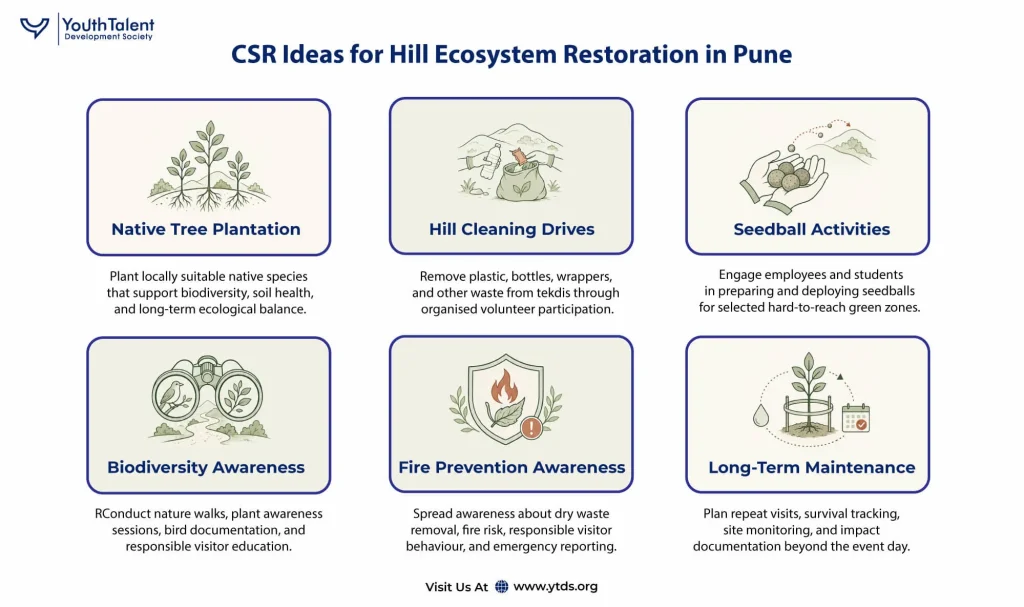
Companies can support Pune hill restoration in multiple ways. The strongest programs combine employee volunteering with expert-led planning, NGO implementation, and measurable reporting.
1. Hill Cleaning Drive With Employee Volunteers
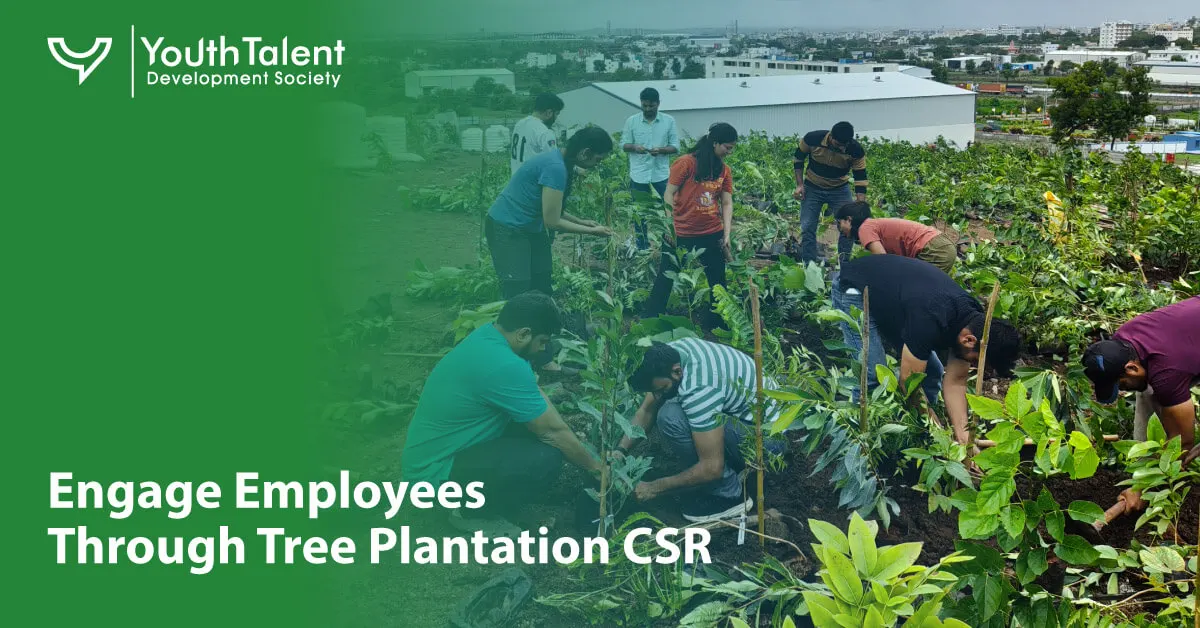
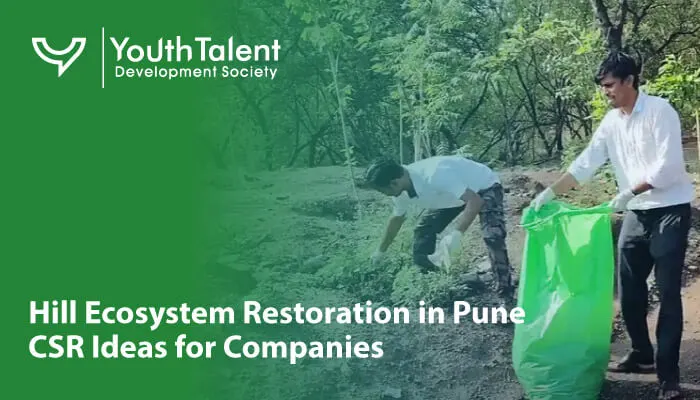
A hill cleaning drive is a practical CSR activity for companies that want visible employee participation. Employees can help remove plastic, bottles, wrappers, and other non-biodegradable waste from selected hill areas.
This activity works well when it includes:
- Pre-identified cleanup zones
- Safety briefing
- Gloves and collection bags
- Waste segregation
- Responsible disposal
- Volunteer attendance tracking
- Photos and reporting
- Awareness session on hill conservation
This is useful for corporate teams because it combines environmental action with employee engagement.
2. Native Tree Plantation on Hill Slopes and Buffer Areas
Companies can support native plantation where it is ecologically suitable and permitted. Plantation should not be random or excessive. It should be planned based on site conditions and expert guidance.
A native plantation CSR activity can include:
- Native species planning
- Sapling procurement
- Pit preparation
- Plantation execution
- Employee participation
- Watering schedule
- Tree protection
- Survival tracking
This helps companies move from symbolic plantation to restoration-focused green CSR.
3. Seedball Preparation and Deployment
Seedball activities are useful for employee volunteering and awareness. Seedballs can support greening in selected hard-to-reach areas, but they should be prepared using suitable native seeds and deployed responsibly.
YTDS has supported community-driven ecosystem restoration activities such as seedball preparation with corporate partners, making this a useful activity for companies that want employee engagement with environmental education.
4. Trail Awareness and Responsible Visitor Campaigns
Many hill issues are linked to visitor behaviour. Companies can support awareness campaigns that encourage responsible hill use.
Campaign messages can include:
- Do not litter
- Carry waste back
- Avoid fires
- Stay on marked paths
- Do not damage saplings
- Respect wildlife
- Avoid loud music
- Participate in cleanup drives
This can be done through signboards, volunteer-led awareness, school sessions, or social campaigns.
5. Biodiversity Protection and Documentation
Pune’s hills are not empty open spaces. They support plants, birds, insects, reptiles, and small mammals. Vetal Hill has documented dry-deciduous vegetation and a range of flora and fauna, including endemic plant species and bird life.
Companies can support biodiversity documentation through:
- Nature walks
- Citizen science activities
- Bird and plant documentation
- Awareness sessions
- Biodiversity signage
- Expert-led surveys
- Educational material for students
This makes CSR more knowledge-driven and helps citizens understand why hill conservation matters.
6. Fire Prevention and Summer Awareness Drives
Pune’s green spaces face fire risk, especially in dry months. Recent reporting has highlighted concerns around manmade fires affecting green spaces in Pune, including biodiversity-rich areas such as Baner, Pashan, Katraj Ghat, and areas linked with Vetal Tekdi conservation concerns.
Companies can support fire-prevention awareness through:
- Community awareness sessions
- Signage on fire risk
- Volunteer monitoring support
- Dry waste removal drives
- Coordination with local authorities
- Responsible visitor behaviour campaigns
This is a useful CSR activity before and during summer.
7. School and College Eco-Volunteering Programs
Hill restoration can be connected with environmental education. Companies can sponsor school and college volunteering programs where students learn about cleanup, native plants, biodiversity, and responsible public-space use.
This type of program can include:
- Guided hill walks
- Cleanup participation
- Native species awareness
- Waste segregation education
- Tree care activities
- Nature journaling
- Student volunteer certificates
This connects environmental CSR with education and youth development.
8. Long-Term Hill Adoption or Maintenance Support
One-day cleanup drives are useful, but long-term adoption creates deeper impact. Companies can support a hill patch or restoration zone over a defined period.
A hill adoption model can include:
- Periodic cleanup drives
- Maintenance visits
- Plantation support
- Survival tracking
- Awareness signage
- Volunteer engagement
- Impact reports
- Community coordination
This gives CSR teams stronger continuity and more meaningful outcomes.
How Companies Can Plan a Hill Restoration CSR Program
A hill restoration CSR program should be planned carefully so that the activity is safe, permitted, and useful for the ecosystem.
1. Select the Right Hill or Restoration Site
Companies should work with NGOs, local bodies, communities, or experts to identify a suitable site. The site should have clear permission and a defined scope of work.
2. Conduct a Basic Site Assessment
Before cleanup or plantation, the team should understand:
- Type of waste present
- Visitor pressure
- Soil and slope condition
- Existing vegetation
- Water availability
- Safety risks
- Access points
- Maintenance needs
3. Define the CSR Activity Scope
The company should decide whether the program will focus on cleanup, plantation, awareness, employee volunteering, biodiversity education, or long-term maintenance.
4. Plan Volunteer Safety
Hill restoration activities need basic safety planning. Volunteers should have gloves, water, first-aid support, clear instructions, and proper supervision.
5. Coordinate Waste Disposal
Collected waste should not be left at the site. It should be segregated and sent for proper disposal through local coordination.
6. Choose Native Species Carefully
If plantation is included, species should be selected based on local ecological suitability, not only availability.
7. Document and Report the Activity
CSR teams should collect data, photos, attendance, geo-tagged proof, and follow-up plans.
8. Plan Follow-Up
The strongest CSR programs include repeat visits, survival tracking, maintenance, and updated reporting.
What Companies Should Measure
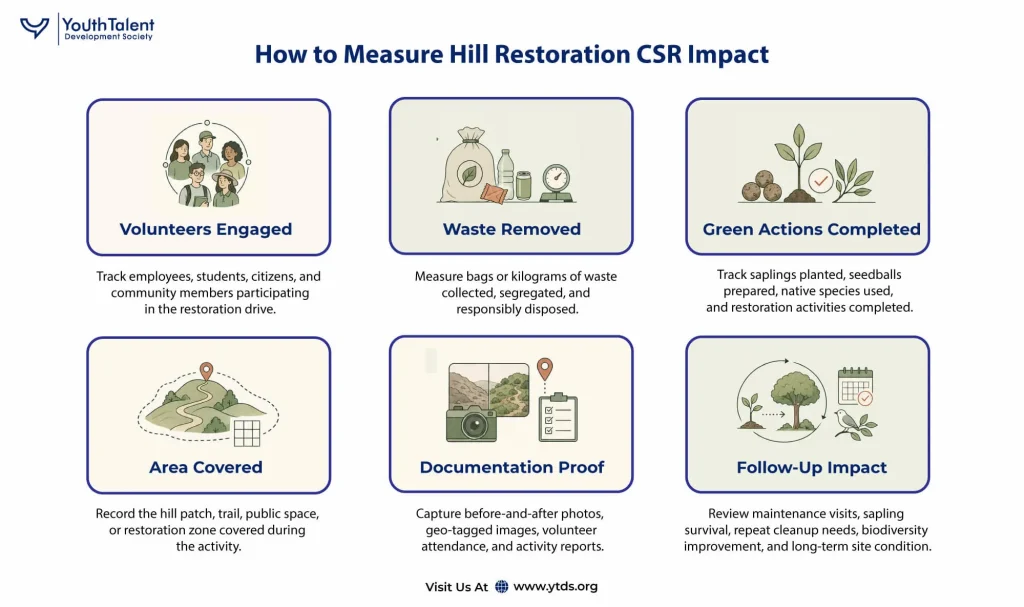
Hill restoration CSR should be measured through both activity and outcome indicators.
Useful metrics include:
- Number of employees or volunteers involved
- Volunteer hours contributed
- Hill area or site covered
- Bags or kilograms of waste collected
- Type of waste removed
- Saplings planted, if applicable
- Native species used
- Geo-tagged photos
- Awareness sessions conducted
- Students or community members reached
- Follow-up visits completed
- Sapling survival rate
- Maintenance actions taken
- Before-and-after documentation
These metrics help companies show that the activity created practical environmental value.
Common Mistakes to Avoid
Companies should avoid treating hill restoration as a quick event. Common mistakes include:
- Conducting cleanup without permission
- Leaving collected waste at the site
- Planting unsuitable species
- Ignoring native biodiversity
- No watering or maintenance plan
- No volunteer safety briefing
- No waste segregation
- No follow-up visits
- Focusing only on photos
- No impact report
Hill restoration should be planned as an environmental responsibility, not just an employee activity.
How YTDS Supports Hill Ecosystem Restoration in Pune
Youth Talent Development Society works across Environment, Empowerment, Education, and Employment. Under its Environment pillar, YTDS supports structured environmental initiatives such as tree plantation, Miyawaki forests, seedball activities, hill cleanups, and restoration-focused community drives.
YTDS’s Clean The Hills initiative invites volunteers and CSR partners to support cleanup drives across India, including Pune, with a focus on restoring hills and public spaces through community and CSR-supported action.
YTDS has also showcased hill ecosystem restoration work in Pune through a CSR case study that includes cleanup drives, native tree plantation, biodiversity improvement, and community participation.
For companies, YTDS can support hill restoration CSR programs with:
- Site coordination
- Cleanup drive planning
- Employee volunteer mobilisation
- Native plantation support
- Seedball activities
- Awareness sessions
- Documentation and photos
- Geo-tagged proof
- Maintenance planning
- Impact reporting
This helps companies execute environmental CSR programs that are structured, measurable, and connected to real local needs.
Conclusion
Pune’s hills are valuable urban ecosystems. They support biodiversity, improve the city’s green cover, provide open spaces for citizens, and contribute to environmental balance. But they are also under pressure from waste, urbanisation, fires, and unplanned activity.
CSR can play an important role in restoring and protecting these hills.
Companies can support hill ecosystem restoration in Pune through cleanup drives, native plantation, seedball activities, biodiversity awareness, fire-prevention campaigns, student volunteering, and long-term maintenance support.
The most effective programs are not one-day events. They are planned, documented, monitored, and repeated over time.
Partner with YTDS to support hill ecosystem restoration in Pune through cleanup, native plantation, employee volunteering, and measurable environmental impact.
FAQs
1. What is hill ecosystem restoration?
Hill ecosystem restoration means improving the ecological health of hill areas through cleanup, native plantation, biodiversity protection, soil care, awareness, and long-term maintenance.
2. Why are Pune’s hills important?
Pune’s hills are important because they provide green cover, support biodiversity, reduce heat, improve public access to open spaces, and contribute to the city’s environmental health.
3. What are the best CSR activities for hill restoration in Pune?
The best CSR activities include hill cleaning drives, native tree plantation, seedball activities, biodiversity awareness, fire-prevention campaigns, employee volunteering, and long-term maintenance support.
4. Can companies organise employee volunteering drives for hill cleaning?
Yes. Companies can organise employee volunteering drives for hill cleaning with proper site permission, safety planning, waste collection, responsible disposal, documentation, and follow-up.
5. Why is native plantation important for Pune hills?
Native plantation is important because native species are better suited to local soil, climate, rainfall, and biodiversity needs. They support local ecological balance and usually have better survival potential.
6. How can companies measure hill restoration CSR impact?
Companies can measure impact through volunteers involved, waste collected, site area covered, saplings planted, species used, geo-tagged photos, awareness sessions, follow-up visits, and survival rate.