







Tree plantation is one of the most widely adopted CSR initiatives in India. It offers visible impact, aligns with environmental goals, and is easy to scale across regions.
But here’s the problem.
Plantation drives can struggle to create long-term impact when planning, survival monitoring, and post-plantation care are weak.
For CSR teams, the real challenge is not just planting trees – it’s ensuring they survive and deliver measurable outcomes.
This guide breaks down the actual cost of CSR tree plantation in India, along with execution models, timelines, and how to maximize impact.
How Much Does CSR Tree Plantation Cost in India?

CSR tree plantation cost in India can vary significantly from one project to another. A simple per-tree price does not show the full cost of execution because the final budget depends on the site, species, plantation method, protection requirements, maintenance period and reporting scope.
When companies compare tree plantation cost per tree, they should check what the quoted amount actually includes. A lower price may cover only the sapling and planting activity, while a more complete project may also include site preparation, irrigation, tree protection, maintenance, survival monitoring, geo-tagging and CSR documentation.
For this reason, companies should compare the scope behind the per-tree cost, not just the headline price.
How Tree Plantation Cost Per Acre Varies in India
Tree plantation cost per acre depends heavily on the plantation model and site conditions. Two projects covering the same land area can have very different budgets depending on planting density, soil preparation, water availability, species mix and maintenance requirements.
Per-acre budgeting should consider:
- Site preparation and soil improvement
- Number and type of saplings
- Plantation density
- Irrigation and water access
- Tree guards or other protection
- Labour and logistics
- Maintenance duration
- Monitoring and survival tracking
- Documentation and impact reporting
Companies planning a larger plantation should therefore request a site-specific estimate rather than rely on a generic per-acre benchmark.
How to Build a CSR Tree Plantation Budget
Instead of starting with a fixed number of trees, companies should build the plantation budget around the complete project scope.
A practical CSR plantation budget can include:
- Site assessment and preparation
- Saplings and species selection
- Plantation labour and logistics
- Irrigation and water arrangements
- Tree protection where required
- Maintenance and replacement planting
- Survival monitoring and field visits
- Geo-tagging, documentation and impact reporting
The final number of trees that can be supported by a CSR budget should be calculated only after the site, plantation model and maintenance requirements are confirmed.
How CSR Plantation Projects Are Executed
A structured plantation program follows a clear process:
1. Site Selection
- Land identification (government / private / institutional)
- Soil and climate suitability
- Water availability
2. Species Selection
- Native and region-specific trees
- Focus on biodiversity and long-term growth
3. Plantation Execution
- Ground preparation
- Sapling plantation
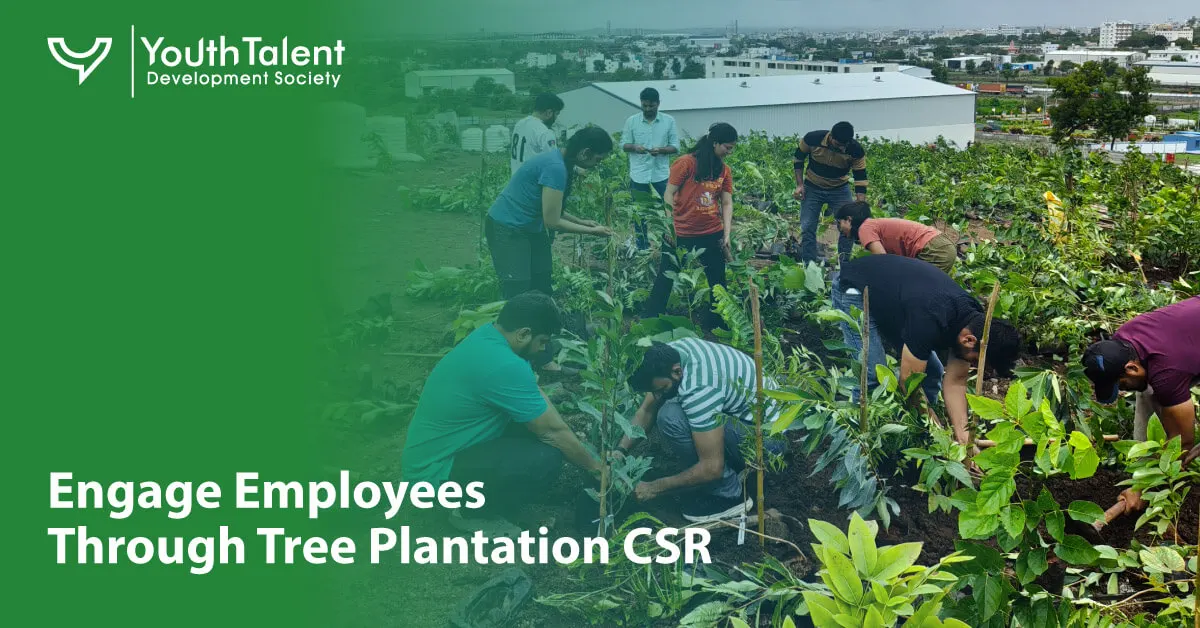
- Volunteer participation
4. Maintenance & Monitoring
- Watering cycles
- Soil care
- Protection and tracking
This stage determines survival rate.
5. Impact Reporting
CSR reporting typically includes:
- Trees planted
- Survival rate
- Area restored
- Indicative environmental impact
What Affects the Cost of Plantation Programs?
Cost differences come from:
- Location (urban vs rural)
- Scale of plantation
- Maintenance duration
- Type of plantation (regular vs dense)
- Monitoring and reporting requirements
A lower quote may reflect a narrower project scope, so CSR teams should compare what is included in site preparation, maintenance, protection, monitoring and reporting before comparing providers on price alone.
Why Survival Rate Matters More Than Cost
Plantation success should not be judged only by the number of saplings planted. Survival depends on factors such as species suitability, planting quality, water availability, protection, maintenance and local site conditions.
CSR teams should therefore track survival at defined intervals and document replacement planting or corrective action where required.
A more complete evaluation can include:
- Trees planted
- Trees surviving after monitoring periods
- Replacement planting completed
- Maintenance activities conducted
- Area restored or improved
- Biodiversity or community outcomes where relevant
This gives companies a clearer picture of long-term plantation performance than the initial planting count alone.
Typical Phases of a CSR Plantation Project

The exact timeline of a CSR plantation project depends on the site, season, permissions, plantation model and maintenance scope. A typical project moves through these phases:
- Planning and site assessment – define objectives, identify land and assess site suitability
- Site preparation and species planning – prepare the land and finalise locally suitable species
- Plantation execution – conduct planting according to the approved plan and seasonal conditions
- Maintenance and monitoring – support establishment, track survival and take corrective action where needed
- Impact reporting – document plantation progress, survival, maintenance and relevant environmental outcomes
The project schedule should therefore be based on site conditions and ecological requirements rather than a fixed universal timeline.
Common Mistakes CSR Teams Should Avoid
- Focusing only on number of trees
- No post-plantation maintenance
- Using non-native species
- Poor site selection
- No impact tracking
Avoiding these mistakes can significantly improve outcomes.
How YTDS Executes CSR Plantation Programs
YTDS follows a structured, execution-focused approach:
- 150,000+ trees planted across 45+ areas
- 80–95% survival rates in monitored programs
- Youth-led execution model
- Focus on ecological restoration, not just plantation
YTDS plantation projects are planned around site suitability, implementation, maintenance, monitoring and documentation so companies can evaluate progress beyond the initial plantation activity.
FAQs
1. How is CSR tree plantation cost calculated in India?
CSR tree plantation cost is calculated based on factors such as site preparation, number and type of saplings, plantation density, labour, irrigation, protection, maintenance duration, monitoring and reporting requirements. The final cost should be based on the project scope rather than a fixed per-tree price.
2. Why does tree plantation cost vary between projects?
Costs vary because every plantation site has different land conditions, water access, species requirements, planting density, logistics, protection needs and maintenance requirements. Two projects with the same budget may therefore support different numbers of trees.
3. How should companies measure plantation survival?
Companies should track the number of surviving trees at defined monitoring intervals and record replacement planting, maintenance activities and corrective action where required. Survival should be evaluated over time rather than through a single fixed benchmark.
4. What affects plantation cost the most?
Major cost factors include site conditions, plantation density, species selection, water access, protection requirements, labour and logistics, maintenance duration, survival monitoring and reporting scope.
5. How long does a plantation project take?
The timeline depends on the site, season, permissions, plantation model and maintenance requirements. Planting may be completed within a defined execution period, but maintenance, survival monitoring and reporting continue beyond the plantation activity.
Conclusion
Tree plantation is one of the most effective CSR initiatives in India – but only when backed by proper planning, budgeting, and execution.
Companies that focus on survival, monitoring, and structured execution create real environmental impact instead of short-term visibility.