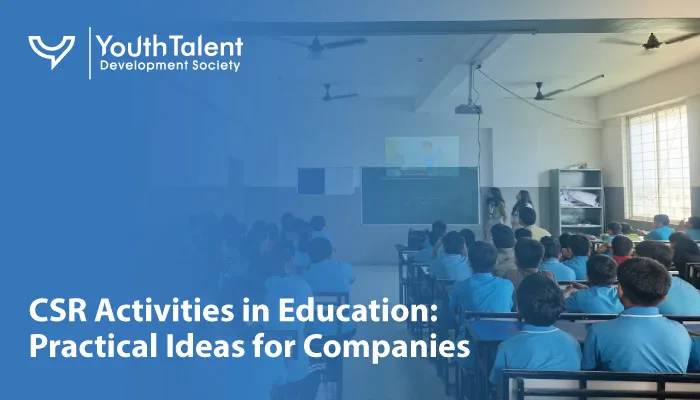





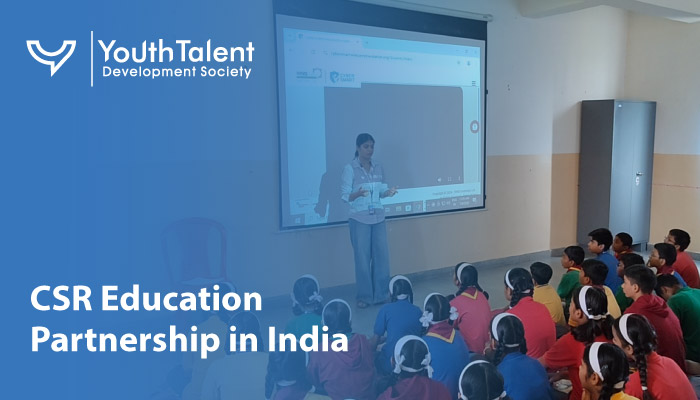
Education is one of the most meaningful areas where companies can create long-term social impact through CSR. Across India, many schools and students need support in the form of learning resources, digital access, mentoring, career guidance, cyber safety awareness, teacher support, and structured student development programs.
However, education CSR is not only about donating books, school bags, or computers. For companies that want deeper and measurable impact, a CSR education partnership in India with the right NGO can make the initiative more structured, practical, and outcome-focused.
A strong company-NGO partnership helps connect corporate intent with real community needs. Companies bring resources, volunteers, and strategic support, while NGOs bring local understanding, school coordination, beneficiary mobilisation, on-ground execution, documentation, and impact reporting.
Education is also included under Schedule VII of the Companies Act, 2013, which lists “promoting education,” including special education and employment-enhancing vocational skills, as activities that may be included by companies in their CSR policies.
For organisations like YTDS, education CSR partnerships create an opportunity to support students, schools, youth, and communities through structured programs that go beyond one-time activities.
What Is a CSR Education Partnership?
A CSR education partnership is a collaboration between a company and an NGO to plan, execute, and measure education-focused social impact programs.
These programs may support:
- School students
- Teachers
- Government or low-income schools
- Rural and underserved communities
- Youth preparing for employment
- Girls and young women needing mentorship or confidence-building support
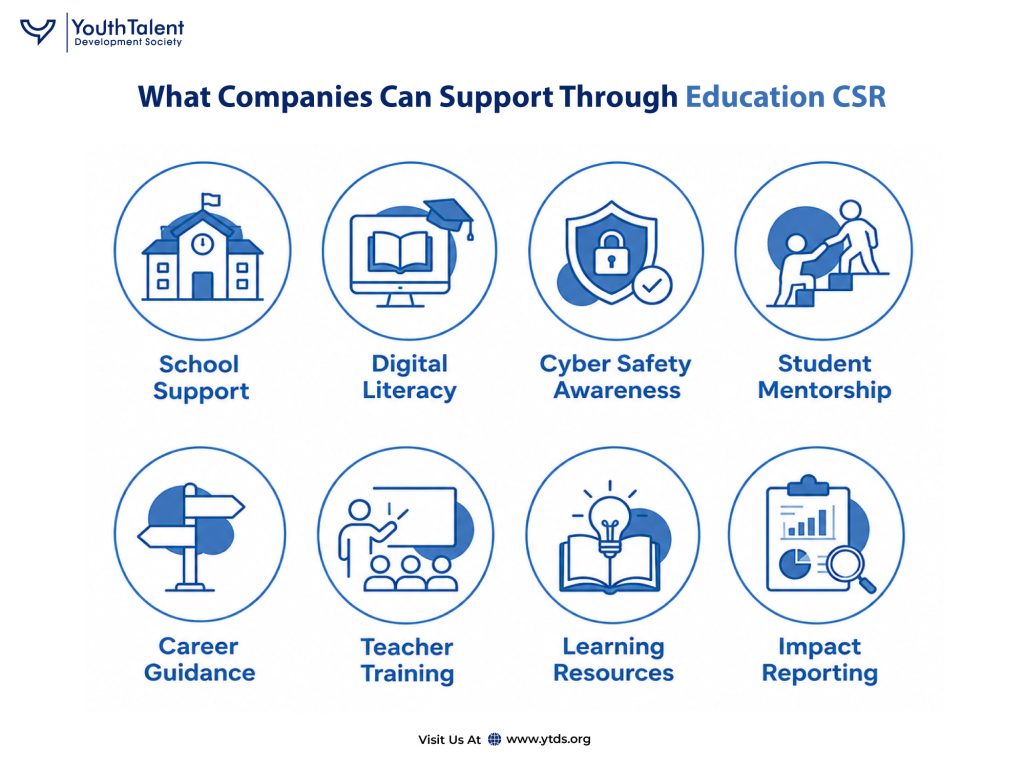
A CSR education partnership can include school support, digital literacy, cyber safety awareness, mentorship, career guidance, teacher training, student learning resources, and long-term school development activities.
The main purpose is to make education CSR more structured. Instead of conducting a one-day donation drive, companies can work with NGOs to understand actual needs, design relevant programs, execute them properly, and measure the outcomes.
Why Companies Need NGO Partners for Education CSR
Many companies want to contribute to education, but they may not have the local knowledge or execution capacity required to run education programs directly.
An NGO partner helps bridge this gap.
NGOs can support companies by:
- Identifying schools and communities that need support
- Conducting need assessments
- Coordinating with school authorities
- Mobilising students and beneficiaries
- Planning the program structure
- Managing employee volunteering activities
- Executing workshops and sessions
- Collecting attendance, feedback, and photos
- Preparing impact reports
- Supporting follow-up activities
The National CSR eXchange Portal, an initiative of the Ministry of Corporate Affairs, is designed to connect corporates, beneficiaries, and implementing agencies, which shows the importance of structured collaboration in CSR execution.
For education CSR, this kind of partnership is especially important because schools and students often need consistent engagement, not just one-time support.
Why Education CSR Needs Long-Term Planning
One-time education CSR activities can be useful, but their impact is often limited.
For example, a school kit distribution drive can help students immediately. A one-day digital literacy session can create awareness. A single mentoring session can inspire students. But long-term change usually needs repeated engagement.
A long-term CSR education partnership allows companies and NGOs to:
- Understand student needs better
- Support the same school or student group over time
- Conduct repeated learning sessions
- Track student participation
- Provide follow-up support
- Improve program quality
- Measure actual outcomes
- Build trust with schools and communities
Education impact is stronger when companies move from isolated activities to structured programs. This is where NGOs can help companies convert CSR intent into sustained student development.
For companies looking to support students through a structured education initiative, YTDS’s Each One Teach One program combines learning support, digital access, mentorship, and continued student development.
Key Education CSR Programs Companies Can Run With NGOs
1. School Support and Learning Resource Programs
Many students face basic learning challenges because they lack essential resources. Companies can support schools through learning materials and student kits.
This may include:
- Notebooks
- Stationery
- School bags
- Learning kits
- Library books
- Classroom learning charts
- Basic classroom materials
- Educational games and activity tools
These activities may look simple, but they can reduce practical barriers for students and support regular participation in learning.
NGOs can help companies identify what a school actually needs, rather than distributing generic materials that may not solve the real problem.
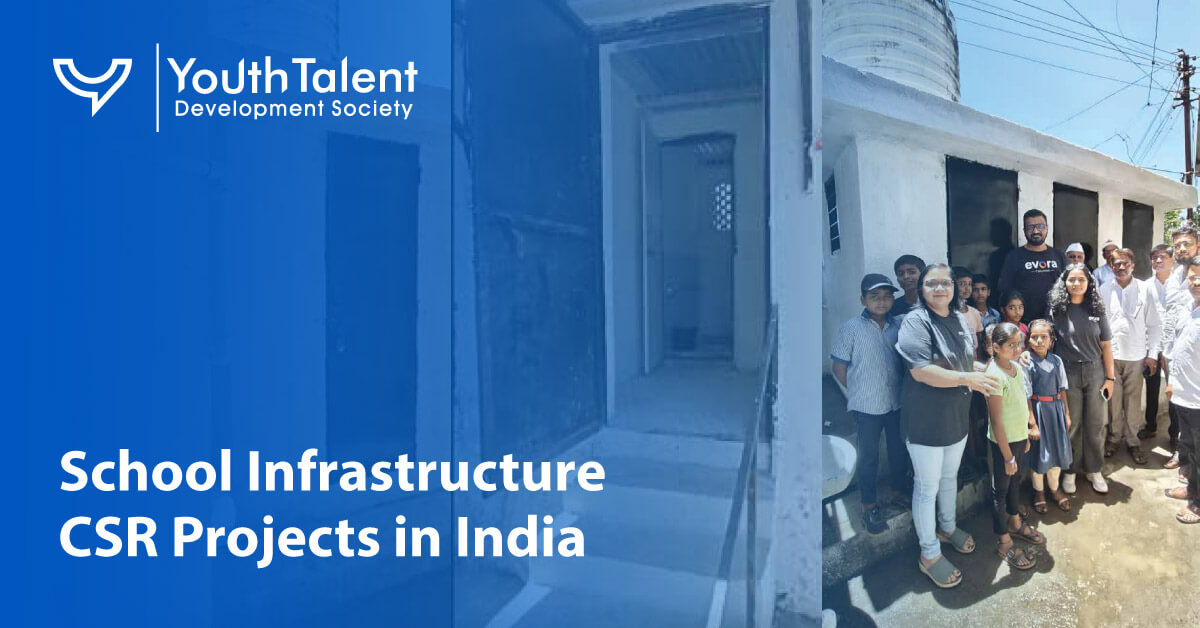
Companies planning broader education partnerships can also consider school infrastructure CSR projects where classrooms, sanitation, digital facilities, libraries, or other essential school resources require improvement.
2. Digital Literacy Programs
Digital literacy is one of the most important education CSR areas today. Students need basic digital skills not only for education, but also for future employment and everyday life.
A digital literacy program can cover:
- Basic computer use
- Internet browsing
- Email basics
- Online learning tools
- Digital payments awareness
- Safe smartphone use
- Online form filling
- Responsible use of digital platforms
Companies can involve employee volunteers in these sessions, especially employees from IT, operations, HR, finance, or digital teams.
Digital literacy programs are useful because they connect education with employability. Students who learn basic digital skills become better prepared for higher education, job applications, online learning, and future workplace expectations.
3. Cyber Safety Awareness for Students
As students use smartphones, social media, and online learning platforms more frequently, cyber safety has become an important part of education.
A cyber safety awareness program can teach students about:
- Online privacy
- Strong passwords
- Cyberbullying
- Fake links and scams
- Social media safety
- Safe online communication
- Responsible digital behaviour
- Reporting unsafe online activity
This type of CSR program is especially relevant for schools where students may have access to phones but limited awareness about online risks.
Companies can support these sessions through employee volunteers, digital safety experts, or NGO-led awareness modules.
4. Student Mentorship Programs
Mentorship can create strong personal impact for students. Many students do not get access to professionals who can guide them about careers, communication, confidence, and future planning.
Through a CSR education partnership, companies can create mentorship programs where employees interact with students in a structured way.
Mentorship sessions can cover:
- Career awareness
- Confidence building
- Communication skills
- Goal setting
- Personal discipline
- Time management
- Exposure to professional life
- Motivation for higher education
- Life skills and decision-making
A one-time mentorship session can inspire students, but a repeated mentorship program can create deeper impact. NGOs can help structure the sessions, prepare students, coordinate volunteers, and track participation.
5. Career Guidance and Youth Development
Education CSR should also help students think about their future. Career guidance and youth development programs can support students who are moving from school to college, skill training, or employment.
Companies can run sessions on:
- Career options
- Resume basics
- Interview preparation
- Workplace readiness
- Communication skills
- Professional behaviour
- LinkedIn profile basics
- Vocational training awareness
- Skill development pathways
These programs are especially useful for older students and youth from underserved communities.
They also connect education CSR with employment and livelihood outcomes, which makes the program more practical and future-oriented.
6. Teacher Training and Capacity Building
Teachers are central to education impact. A strong CSR education partnership should not only support students, but also help teachers where possible.
Teacher capacity-building programs can include:
- Digital teaching tools
- Activity-based learning
- Classroom engagement
- Basic student counselling
- Cyber safety awareness
- Use of online resources
- Technology-supported teaching
- Student progress tracking methods
When teachers receive support, the benefit continues beyond the CSR activity. This makes teacher training one of the more sustainable education CSR interventions.
Companies can support NGOs in designing teacher-focused programs that improve classroom delivery and student engagement.
7. School Adoption Under CSR
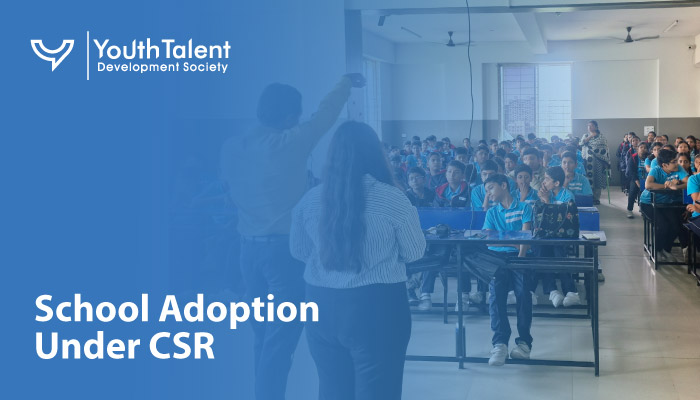
School adoption is one of the most structured models of education CSR. Instead of supporting a school through a single activity, companies can support the same school over a longer period.
A school adoption program may include:
- Infrastructure support
- Learning resources
- Digital access
- Library support
- Mentorship programs
- Digital literacy sessions
- Cyber safety awareness
- Teacher support
- Student progress tracking
- Regular reporting
This model works well when a company wants measurable long-term education impact. It allows both the company and NGO to plan activities in phases and show progress over time.
School adoption also helps companies build stronger CSR stories because the change can be documented through before-and-after records, activity reports, student participation, and feedback.
How Companies Can Choose the Right NGO Partner for Education CSR
Choosing the right NGO partner is one of the most important decisions in any CSR education partnership.
Companies should evaluate the NGO on more than basic availability. The right partner should have credibility, education-sector understanding, school access, execution capacity, and reporting discipline.
A useful checklist includes:
- Legal registration and basic credibility
- Experience in education programs
- Understanding of student and school needs
- Ability to coordinate with schools
- Local execution capacity
- Volunteer management experience
- Documentation and reporting quality
- Transparent communication
- Ability to measure impact
- Follow-up support after the activity
Companies should also check whether the NGO can convert a broad idea into a practical program plan. For example, “digital literacy for students” should become a clear program with target students, session topics, trainer plan, materials, timeline, attendance, and reporting format.
This makes the CSR program easier to approve, execute, and measure.
How to Plan a CSR Education Partnership Step by Step
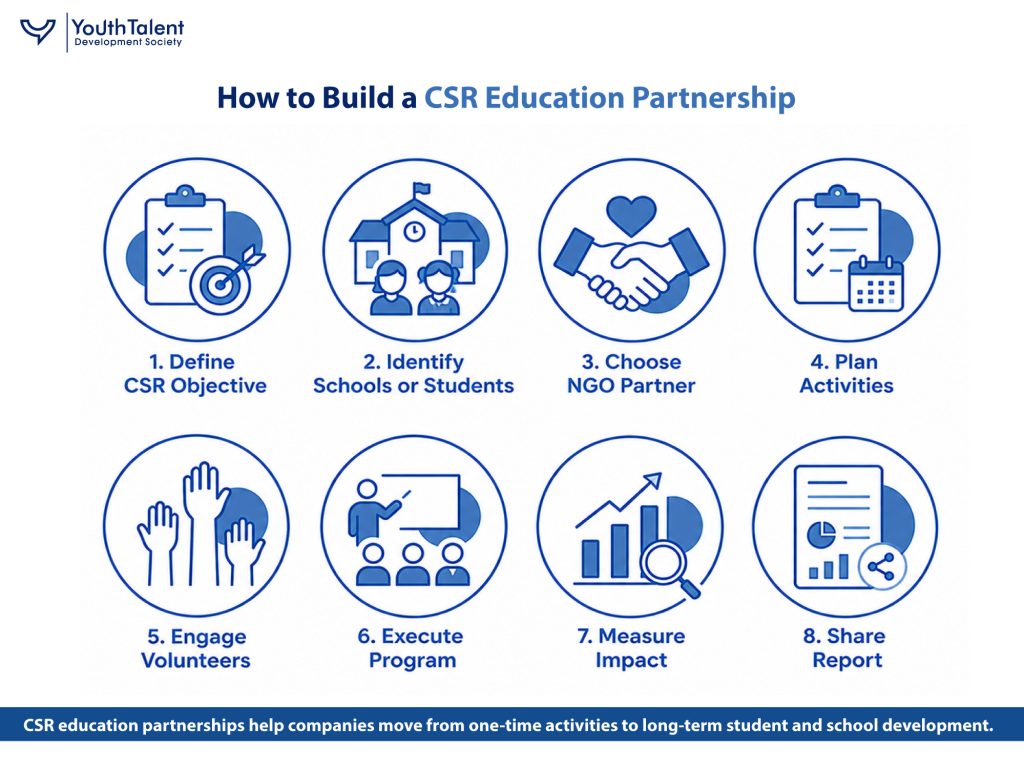
A good CSR education partnership should be planned before execution begins. Companies and NGOs can follow a simple step-by-step process.
Step 1: Define the CSR Objective
The company should first decide what it wants to achieve.
Examples include:
- Improving digital literacy
- Supporting school students
- Creating cyber safety awareness
- Providing learning resources
- Supporting girls’ education
- Building student confidence
- Improving employability awareness
- Supporting long-term school development
A clear objective helps the NGO design the right activity.
Step 2: Identify the Target Beneficiaries
The next step is to identify who the program is meant for.
The beneficiaries may include:
- Primary school students
- Secondary school students
- College students
- Teachers
- Girls and young women
- Rural students
- Youth seeking employment
- Students from underserved communities
Different groups need different program formats. A digital literacy session for school students will be different from an employability session for youth.
Step 3: Select the Right Program Format
Companies can choose from different education CSR formats.
Examples include:
- One-day awareness session
- Multi-session workshop
- Monthly mentoring program
- School adoption model
- Digital literacy module
- Employee volunteering activity
- Learning resource support
- Teacher capacity-building program
The format should match the company’s budget, employee availability, CSR objective, and expected impact.
Step 4: Choose the NGO Implementation Partner
The NGO partner should help convert the CSR objective into a workable execution plan.
The NGO can support:
- School identification
- Need assessment
- Program design
- Volunteer coordination
- Activity execution
- Documentation
- Impact reporting
- Follow-up planning
The National CSR eXchange Portal identifies itself as an interactive platform for CSR stakeholders, highlighting the role of collaboration between corporates and implementing agencies in CSR activity planning and execution.
Step 5: Plan Activities and Timeline
Before implementation, the company and NGO should define:
- Number of sessions
- Activity dates
- Location
- Student group
- Volunteer roles
- Materials required
- Trainer requirements
- Documentation format
- Reporting timeline
- Follow-up plan
This avoids confusion during execution and makes the program more professional.
Step 6: Execute With Documentation
During execution, proper documentation should be collected.
This may include:
- Attendance records
- Activity photos
- Session details
- Volunteer participation
- Student participation
- Teacher feedback
- Student feedback
- Program observations
- Materials distributed
- Short impact summary
Good documentation helps companies prepare internal CSR reports and communicate impact to stakeholders.
Step 7: Measure and Report Impact
After the activity, the company and NGO should review outcomes.
Impact reporting can include:
- What was planned
- What was executed
- How many students were reached
- How many sessions were conducted
- What feedback was received
- What outcomes were observed
- What follow-up is recommended
This makes education CSR more transparent and useful for future planning.
How Companies Can Measure Education CSR Impact
Measuring impact is important because CSR teams need proof that the program created meaningful value.
Important education CSR metrics include:
- Number of students reached
- Number of schools supported
- Number of teachers trained
- Number of sessions conducted
- Number of learning kits distributed
- Number of digital literacy participants
- Number of mentorship hours completed
- Number of employee volunteers involved
- Student attendance
- Student feedback
- Teacher feedback
- Parent or community feedback
- Before-and-after documentation
- Follow-up progress
Companies should also track qualitative outcomes such as confidence improvement, awareness improvement, student participation, and willingness to continue learning.
Not every education impact can be measured immediately. Some outcomes require repeated engagement and follow-up. That is why long-term CSR education partnerships are stronger than one-time events.
How Employee Volunteering Can Support Education CSR
Employee volunteering can make education CSR more engaging and practical.
Company employees can support students through:
- Mentoring
- Career guidance
- Digital literacy sessions
- Resume-building workshops
- Interview preparation
- Cyber safety awareness
- Reading activities
- Communication skills sessions
- Skill-sharing workshops
This creates value for both students and employees. Students receive exposure to working professionals, while employees get the opportunity to contribute to social impact beyond their regular work.
However, companies should use safe compliance language. Employee volunteering can support CSR and employee engagement goals, but companies should evaluate CSR expenditure treatment as per applicable CSR rules and professional guidance.
How YTDS Can Support CSR Education Partnerships
YTDS can support companies in designing and implementing education CSR programs that create practical and measurable impact.
As an NGO working across Environment, Education, Employment, and Empowerment, YTDS can help companies build education partnerships that go beyond one activity.
YTDS can support companies with:
- School need assessment
- Education CSR program planning
- Digital literacy workshops
- Cyber safety awareness sessions
- Student mentorship programs
- Career guidance sessions
- Learning resource support
- Employee volunteering coordination
- School adoption planning
- Documentation and reporting
- Long-term impact tracking
YTDS’s 4E model also helps make education programs more holistic.
For example:
- Environment can support school-based environmental awareness and student participation in green activities.
- Empowerment supports confidence-building, mentorship, and student safety.
- Education supports student learning, digital literacy, and school development.
- Employment supports youth skill development, career awareness, and employability.
This makes YTDS a suitable partner for companies that want education CSR programs with both social impact and structured execution.
Why CSR Education Partnerships Should Be Built for Long-Term Impact
Education is not solved through one event. It needs consistency, trust, and continued support.
A one-day workshop may create awareness, but a series of workshops can build skills. A one-time mentoring session may inspire students, but a long-term mentorship program can guide them through real decisions. A school support activity may solve an immediate need, but a long-term school partnership can improve the learning environment over time.
Companies should look at education CSR as a long-term investment in students, schools, and communities.
Long-term partnerships help companies:
- Build deeper community trust
- Measure impact more clearly
- Improve program quality
- Create stronger CSR stories
- Engage employees repeatedly
- Support students beyond one-time activities
- Align CSR with education and employability outcomes
For NGOs, long-term partnerships also make it easier to understand community needs and design better programs.
Conclusion
CSR education partnerships in India can help companies create meaningful and measurable impact in schools, student development, digital literacy, mentorship, and youth readiness.
Instead of limiting education CSR to one-time donations or isolated activities, companies can work with NGOs to identify real needs, plan structured programs, execute activities professionally, involve employee volunteers, and measure outcomes over time.
For companies looking to create long-term education impact, YTDS can support CSR education partnerships through school coordination, digital literacy, cyber safety, mentorship, career guidance, employee volunteering, documentation, and impact reporting.
Partner with YTDS for education CSR programs that support schools, students, digital literacy, mentorship, and long-term development.
FAQs
1. What is a CSR education partnership?
A CSR education partnership is a collaboration between a company and an NGO to plan and execute education-focused programs such as school support, digital literacy, mentorship, cyber safety awareness, career guidance, teacher training, and student development.
2. Why should companies work with NGOs for education CSR?
Companies should work with NGOs because NGOs understand local needs, coordinate with schools, mobilise students, execute programs, manage volunteers, document activities, and prepare impact reports.
3. What are examples of education CSR projects?
Examples of education CSR projects include school support, digital literacy workshops, cyber safety awareness, student mentorship, career guidance, learning resource distribution, teacher training, school adoption, and youth skill development programs.
4. How can companies measure education CSR impact?
Companies can measure students reached, schools supported, sessions conducted, teachers trained, learning materials distributed, mentorship hours, employee volunteer participation, student feedback, teacher feedback, and follow-up progress.
5. Can employee volunteering be part of education CSR?
Employee volunteering can support education CSR and employee engagement through mentoring, digital literacy, career guidance, cyber safety awareness, and skill-sharing sessions. Companies should evaluate CSR expenditure treatment as per applicable CSR rules and professional guidance.
6. How can YTDS support education CSR programs?
YTDS can support companies with school need assessment, education CSR planning, digital literacy, cyber safety awareness, mentorship, career guidance, employee volunteering, documentation, reporting, and impact tracking.
7. What is the difference between CSR education activities and CSR education partnership?
CSR education activities can be one-time or standalone programs, while a CSR education partnership is a structured collaboration between a company and an NGO to plan, execute, measure, and improve education programs over time.