









Students today spend a major part of their lives online. From classes and assignments to social media, gaming, payments, and communication, digital platforms are now part of everyday learning and social interaction.
But with this increased digital exposure comes risk.
Students face cyber threats such as phishing links, online fraud, cyberbullying, fake profiles, privacy misuse, misinformation, and unsafe digital behavior. Many of these risks can be avoided if students are taught practical cyber safety habits early.
Cyber safety awareness is no longer optional. It is an essential life skill for students in India.
What is Cyber Safety Awareness?
Cyber safety awareness means understanding how to use the internet, digital devices, apps, and online platforms safely.
It teaches students how to:
- identify suspicious links and messages
- protect personal information
- create strong passwords
- avoid online fraud
- respond to cyberbullying
- verify information before trusting it
- report unsafe online activity
The goal is not to create fear. The goal is to help students become confident, responsible, and alert digital users.
Why Cyber Safety Awareness is Important for Students
1. Students Are Highly Active Online
Students use the internet for learning, entertainment, communication, and social networking. This makes them frequent users of digital platforms.
However, many students do not fully understand how their data, photos, passwords, and online actions can be misused.
Cyber safety education helps them understand the risks behind everyday digital behavior.
2. Online Fraud is Becoming More Common
Students may receive fake links, suspicious messages, scam calls, fake reward offers, or fraudulent payment requests.
Without awareness, they may click links, share OTPs, download unsafe apps, or reveal personal information.
A cyber safety program teaches students to pause, verify, and think before acting online.
3. Cyberbullying Can Affect Mental Wellbeing
Cyberbullying is one of the most serious online risks for students.
It can include:
- abusive messages
- public shaming
- fake accounts
- sharing private images
- threats or harassment
- exclusion from online groups
Students need to know that cyberbullying is not normal, and they should report it to trusted adults, institutions, or relevant authorities.
4. Privacy Protection is a Life Skill
Many students share personal details online without realizing the risk.
This can include:
- phone numbers
- location
- school or college details
- personal photos
- passwords
- family information
Cyber safety awareness helps students understand what should and should not be shared online.
5. Strong Digital Habits Prevent Long-Term Risk
Good cyber habits formed early can protect students throughout life.
These habits include:
- using strong passwords
- enabling privacy settings
- not sharing OTPs
- avoiding unknown links
- checking app permissions
- logging out from shared devices
- verifying information before forwarding
Simple habits can prevent serious problems.
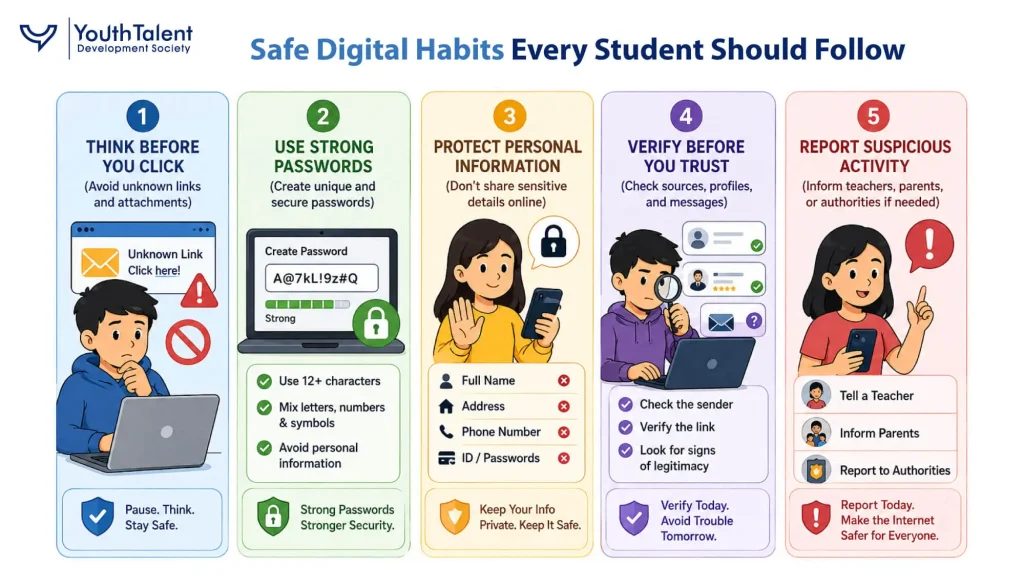
Common Cyber Risks Students Face
Phishing Links
Fake links are often designed to steal login details, passwords, or financial information.
Students should avoid clicking unknown links received through SMS, email, WhatsApp, social media, or gaming platforms.
Online Scams
Scammers may offer fake scholarships, rewards, jobs, discounts, gaming credits, or payment links.
Students should always verify before trusting online offers.
Cyberbullying
Harassment through messages, comments, fake profiles, or image misuse can emotionally affect students.
Cyber safety education teaches students how to respond and where to seek help.
Weak Passwords
Many students use simple passwords or reuse the same password across platforms.
This makes accounts easier to hack.
A strong password should be unique, difficult to guess, and not shared with anyone.
Oversharing Personal Information
Posting too much personal information online can create safety and privacy risks.
Students should be taught to think before sharing anything publicly.
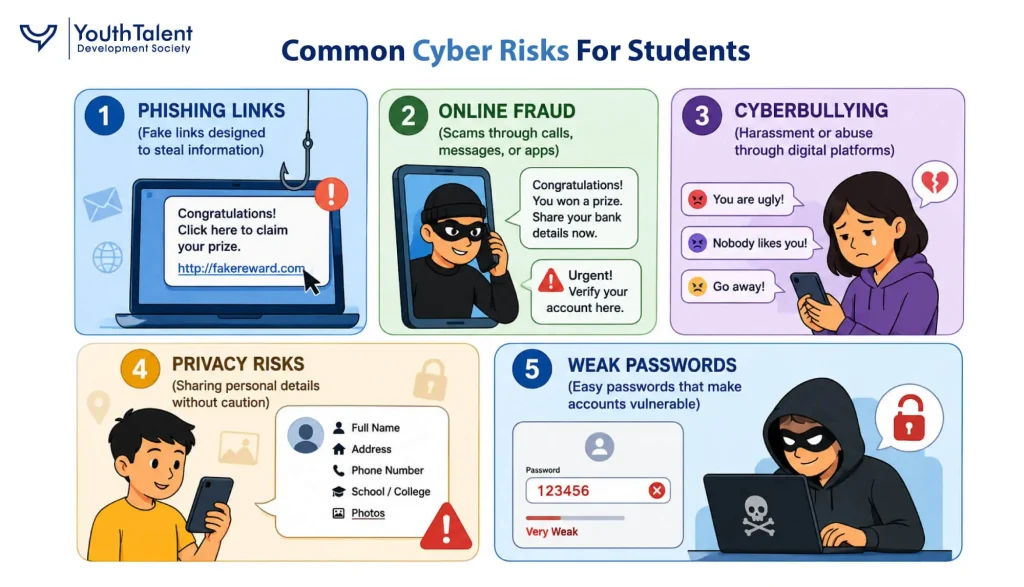
What Should Cyber Safety Workshops Teach?
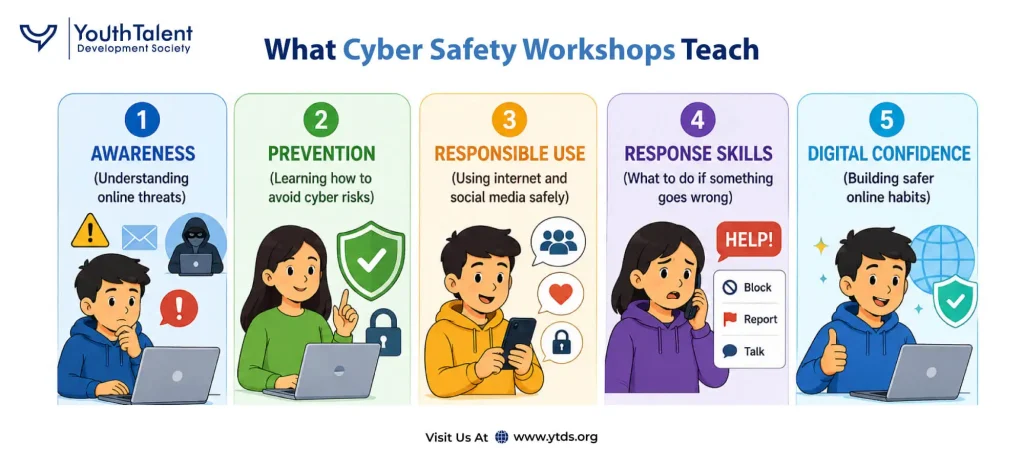
A good cyber safety workshop should be practical, not overly technical.
It should teach students:
1. Think Before You Click
Students should learn to avoid unknown links, suspicious attachments, fake offers, and unverified messages.
2. Protect Personal Information
They should understand why OTPs, passwords, addresses, school details, and private photos must not be shared casually.
3. Use Strong Passwords
Workshops should explain how to create safe passwords and why password reuse is risky.
4. Identify Online Fraud
Students should be able to recognize common scams such as fake rewards, fake job links, fake payment requests, and impersonation.
5. Respond to Cyberbullying
Students should know how to save evidence, block harmful accounts, report abuse, and talk to trusted adults.
6. Use Social Media Responsibly
Students should understand privacy settings, safe posting behavior, and the long-term impact of digital footprints.
Why Schools and Colleges Should Conduct Cyber Safety Programs
Schools and colleges play an important role in preparing students for the digital world.
Cyber safety programs help institutions:
- protect students from online risks
- build responsible digital behavior
- reduce cyberbullying incidents
- improve digital literacy
- create safer learning environments
Just like physical safety and life skills, digital safety should be part of student development.
Why Companies Should Support Cyber Safety Through CSR
Cyber safety education is also a strong CSR opportunity.
Companies can support workshops in schools, colleges, and communities to help students become safer digital users.
Cyber safety CSR programs are useful because they:
- reach large student groups
- address a real and growing social need
- support education and digital inclusion
- create measurable community impact
- align with youth development and safety goals
For companies, supporting cyber safety awareness is a practical way to invest in India’s digital future.
How YTDS Supports Cyber Safety Awareness
YTDS works on digital safety through CyberSmart and CyberFinSmart awareness initiatives.
These programs focus on helping students and youth understand real-world online risks such as fraud, unsafe links, misinformation, and financial safety concerns.
According to YTDS’s corporate deck, CyberSmart has reached 7 lakh+ youth, and CyberFinSmart has reached 5 lakh+ youth, with programs active across schools, colleges, and communities.
The focus is practical: helping young people build safer digital habits, not just giving theoretical awareness.
Benefits of Cyber Safety Awareness for Students
Cyber safety awareness helps students:
- use the internet more responsibly
- avoid scams and fraud
- protect personal data
- respond better to online harassment
- build confidence in digital spaces
- understand privacy and consent
- become safer digital citizens
The long-term benefit is simple: students become better prepared for a digital-first world.
Cyber Safety Tips Every Student Should Follow
- Do not click unknown links.
- Never share OTPs or passwords.
- Use strong and unique passwords.
- Keep social media profiles private.
- Do not accept unknown friend requests.
- Verify information before forwarding.
- Report cyberbullying immediately.
- Avoid downloading apps from unknown sources.
- Think before posting photos or personal details.
- Talk to a trusted adult if something feels unsafe.
FAQs
1. Why is cyber safety awareness important for students?
Cyber safety awareness helps students identify online risks, protect personal information, avoid fraud, and use digital platforms responsibly.
2. What are common cyber threats students face?
Common risks include phishing links, online scams, cyberbullying, privacy misuse, fake profiles, weak passwords, and misinformation.
3. Should schools conduct cyber safety workshops?
Yes. Schools and colleges should conduct cyber safety workshops to help students build safe digital habits and respond to online risks.
4. What should students do if they face cyberbullying?
They should save evidence, block the offender, report the incident, and speak to a trusted adult, teacher, parent, or authority.
5. How can companies support cyber safety awareness?
Companies can support cyber safety workshops through CSR programs in schools, colleges, and communities.
Conclusion
Cyber safety awareness is essential for students in India because digital risks are now part of everyday life.
Students need more than internet access. They need the knowledge and confidence to use digital platforms safely.
When schools, colleges, NGOs, and companies work together, cyber safety education can help build a generation of responsible, aware, and confident digital citizens.