+91-9881904974
 info@ytds.org
.webp)
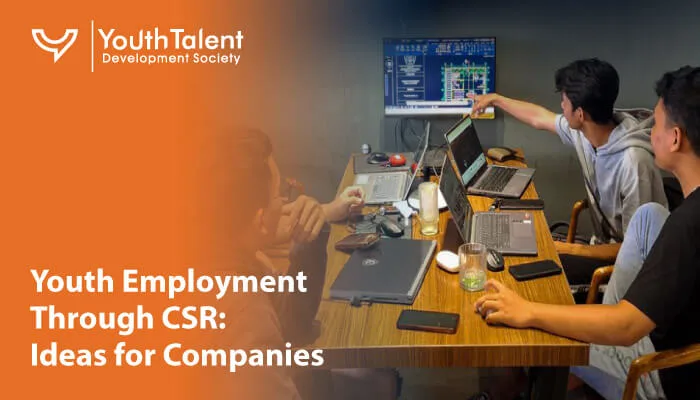
Youth employment is one of India’s most important development priorities. A young person may complete school or college, but still struggle to find the right job because of skill gaps, lack of workplace exposure, poor interview readiness, limited digital confidence, or absence of career guidance.
This is where corporate social responsibility can create long-term impact.
Through structured CSR programs, companies can support youth employment by investing in skill development, digital literacy, employability training, apprenticeships, mentorship, women-focused livelihood programs, and placement-readiness support.
Youth employment through CSR is not only about helping young people get jobs. It is about helping them become confident, skilled, work-ready, and financially independent.
Under Schedule VII of the Companies Act, 2013, CSR activities may include promoting education, including employment-enhancing vocational skills and livelihood enhancement projects. This makes youth employment and skill development a relevant CSR focus area for companies in India.
Why Youth Employment Should Be a CSR Priority
India has a large youth population, but many young people face difficulty moving from education to employment. The challenge is not always lack of education. In many cases, the gap lies between academic learning and workplace readiness.
The India Employment Report 2024 by the International Labour Organization highlights that India has seen improvements in some labour market indicators after 2019, but youth employment, education, and skill-related challenges remain important areas of concern.
For companies, this creates a strong CSR opportunity. Supporting youth employment can help:
- Improve employability among underserved youth
- Bridge the gap between education and work
- Build local talent pipelines
- Support livelihood generation
- Promote women’s economic participation
- Strengthen communities through income stability
- Create measurable social impact
Youth employment CSR programs are especially valuable when they focus on practical outcomes, such as skills gained, interviews attended, apprenticeships supported, placements generated, and income improvement.
What Does Youth Employment Through CSR Mean?
Youth employment through CSR means using CSR programs to help young people prepare for, access, and sustain livelihood opportunities.
It does not always mean direct job placement. It can include different stages of employment readiness, such as:
- Skill development training
- Digital literacy
- Communication and soft-skills development
- Resume and interview preparation
- Career guidance
- Mentorship
- Apprenticeship readiness
- Workplace behaviour training
- Financial literacy
- Entrepreneurship support
- Placement and employer connections
A good youth employment CSR program should not stop after one training session. It should support the young person through a practical pathway: awareness, training, confidence-building, employer exposure, and follow-up.
Practical CSR Activities to Support Youth Employment
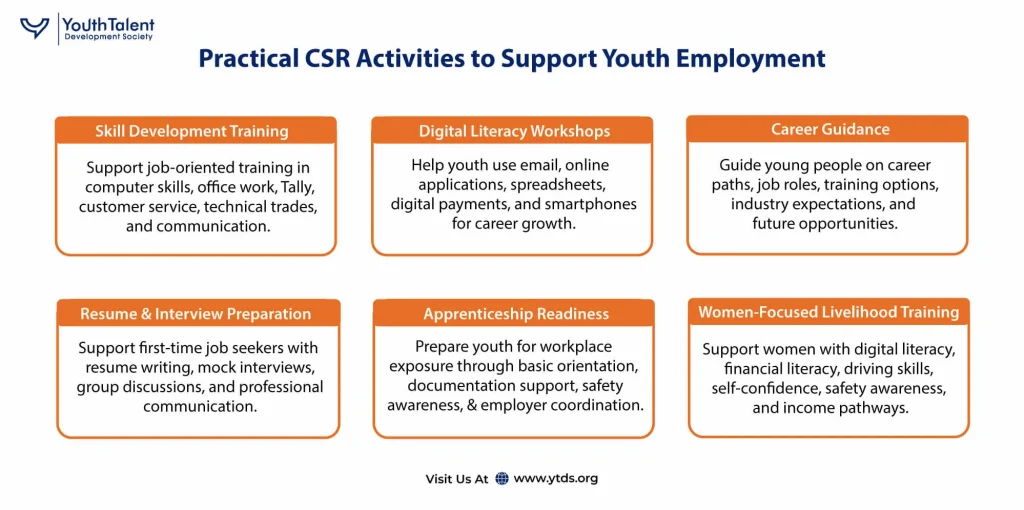
Companies can support youth employment in many practical ways. The best programs are those that match local needs, industry demand, and the current skill level of participants.
1. Skill Development Training
Skill development is the foundation of youth employment CSR. Many young people need practical, job-oriented skills that help them access entry-level opportunities.
Companies can support training in areas such as:
- Basic computer operations
- Tally and accounting
- Data entry
- Retail skills
- Customer service
- Office administration
- Digital tools
- Driving skills
- Technical trades
- Communication skills
India’s Skill India Mission focuses on skill development, reskilling, and upskilling to help people build sustainable careers. A PIB backgrounder states that since 2014, the Ministry of Skill Development and Entrepreneurship has empowered more than 6 crore Indians through various schemes.
CSR programs can build on this need by supporting community-level training that is accessible to underserved youth.
2. Digital Literacy Workshops
Digital skills are now essential for employment. Even entry-level jobs often require basic digital confidence, such as using email, filling online forms, operating spreadsheets, using smartphones safely, and applying for jobs online.
CSR-supported digital literacy workshops can cover:
- Basic computer use
- Email and documentation
- Online job applications
- Digital payments awareness
- Spreadsheet basics
- Internet search skills
- Cyber safety
- Professional use of smartphones
Digital literacy is especially important for rural, semi-urban, and first-generation job seekers who may have access to smartphones but not structured digital learning.
3. Career Guidance and Counselling
Many young people are unsure about which career path to choose. They may not know what skills are required, what opportunities exist, or how to prepare for interviews and entry-level jobs.
Companies can support career guidance programs that include:
- Career awareness sessions
- Industry exposure talks
- One-to-one counselling
- Course and training guidance
- Job-role awareness
- Goal-setting activities
- Guidance for vocational careers
Career guidance helps youth make informed decisions and avoid wasting time on unsuitable training or unrealistic expectations.
4. Resume and Interview Preparation
A trained candidate may still struggle to get hired if they cannot present themselves properly. Resume writing, interview preparation, and professional communication are often missing links in youth employment.
CSR programs can support:
- Resume-building workshops
- Mock interviews
- Group discussion practice
- Spoken communication sessions
- Email writing basics
- LinkedIn profile guidance
- Professional appearance and behaviour training
This type of support is simple but highly practical for first-time job seekers.
5. Apprenticeship-Readiness Programs
Apprenticeships help young people gain practical workplace exposure. NSDC explains apprenticeship training as a model where individuals are engaged by companies as apprentices, combining classroom learning with on-the-job practical training.
CSR programs can help youth become ready for apprenticeships by providing:
- Basic workplace orientation
- Safety training
- Communication skills
- Documentation support
- Industry awareness
- Interview preparation
- Employer coordination
Companies can also support apprenticeship pathways by working with NGOs, training partners, and local employers.
6. Soft-Skills and Communication Training
Technical skills are important, but employers also look for confidence, discipline, teamwork, communication, punctuality, and problem-solving.
CSR-funded soft-skills programs can include:
- Communication skills
- Time management
- Teamwork
- Workplace etiquette
- Leadership basics
- Conflict handling
- Professional discipline
- Confidence-building
These skills help youth not only get jobs but also stay and grow in them.
7. Women-Focused Livelihood Training
Women often face additional barriers to employment, including safety concerns, family responsibilities, mobility challenges, digital access gaps, and lack of confidence.
CSR programs can support women’s livelihood through:
- Digital literacy
- Financial literacy
- Self-defence awareness
- Driving skills
- Entrepreneurship training
- Home-based livelihood skills
- Mentorship
- Career guidance
- Confidence-building sessions
Women-focused employment CSR creates wider social impact because income and confidence often improve decision-making power within families and communities.
8. Financial Literacy for Young Job Seekers
Youth entering the workforce need to understand money management. Without financial literacy, first-time earners may struggle with saving, budgeting, digital payments, banking, and avoiding fraud.
Financial literacy sessions can cover:
- Budgeting basics
- Saving habits
- Bank account usage
- UPI and digital payment safety
- Avoiding loan traps
- Responsible borrowing
- Goal-based financial planning
- Salary management
This helps young people use income responsibly once they start earning.
9. Entrepreneurship and Self-Employment Support
Not every young person will enter formal employment immediately. Some may benefit from self-employment, small enterprise support, or local livelihood opportunities.
CSR programs can support youth entrepreneurship through:
- Business idea workshops
- Basic business planning
- Digital marketing awareness
- Financial literacy
- Market linkage support
- Mentorship from entrepreneurs
- Small tools or equipment support
- Local service-based livelihood models
This is especially useful in communities where formal jobs are limited but local income opportunities exist.
10. Placement Support and Employer Connections
Training becomes stronger when it connects to real opportunities. Companies can support employer-connect programs where trained youth meet recruiters, local businesses, MSMEs, service providers, or industry representatives.
Placement-readiness support can include:
- Job fairs
- Employer interaction sessions
- Interview drives
- Internship matching
- Apprenticeship connections
- Local business partnerships
- Follow-up after joining
This helps convert training into real livelihood outcomes.
How CSR Programs Can Help First-Time Job Seekers
First-time job seekers often need more than skills. They need confidence, exposure, documents, communication practice, and guidance.
A CSR program can help first-time job seekers by supporting:
- Basic career awareness
- Resume creation
- Interview practice
- Digital job application support
- Workplace behaviour training
- Documentation guidance
- Confidence-building
- Mentorship from working professionals
This support is especially important for youth from underserved communities who may not have professional networks or family members who can guide them.
Why NGOs Are Important for Youth Employment CSR
NGOs play a major role in making youth employment CSR programs successful. Companies may have CSR budgets and volunteers, but NGOs understand local communities, beneficiary challenges, and implementation realities.
NGOs can help companies with:
- Identifying eligible youth
- Mobilising participants
- Understanding local employment needs
- Conducting training sessions
- Coordinating mentors and volunteers
- Supporting women participants
- Managing documentation
- Tracking attendance and progress
- Collecting feedback
- Preparing impact reports
- Following up after training
NSDC’s CSR partnership model includes approaches such as candidate sponsorship for skill development programs, supporting skill centres, and helping with skilling in priority areas and sectors. This shows that CSR-backed skilling can be structured around clear partnership and implementation models.
How Companies Can Measure Youth Employment CSR Impact
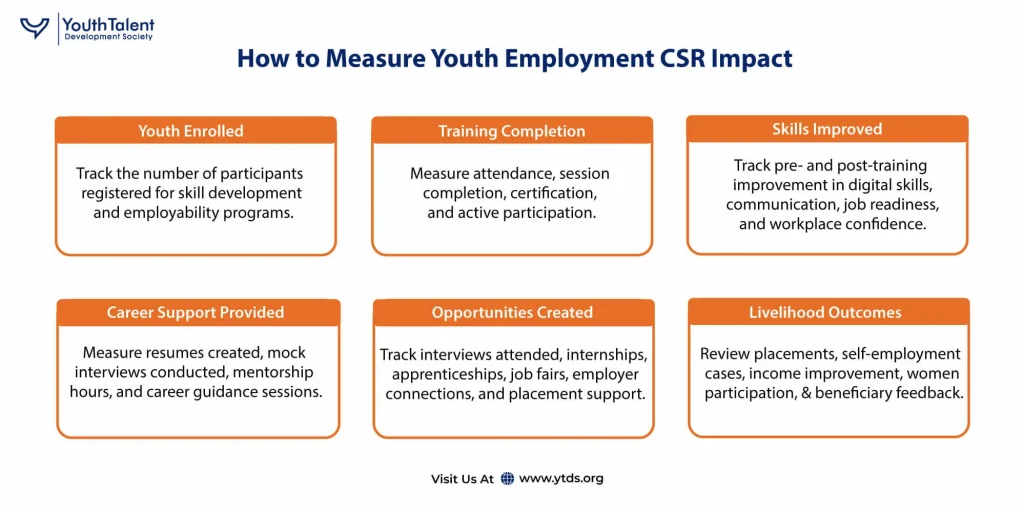
Youth employment CSR should be measured through outcomes, not only activities. A company should not measure success only by the number of training sessions conducted. It should track whether participants became more employable and whether they moved closer to income opportunities.
Useful impact metrics include:
- Number of youth enrolled
- Number of youth completing training
- Attendance rate
- Skills assessed before and after training
- Certifications completed
- Resumes created
- Mock interviews conducted
- Interviews attended
- Internships or apprenticeships supported
- Placements generated
- Self-employment cases supported
- Income improvement after 3 to 6 months
- Women participation rate
- Beneficiary feedback
- Employer feedback
These metrics help CSR teams show practical, measurable impact.
How YTDS Can Support Youth Employment CSR Programs
Youth Talent Development Society works across Environment, Empowerment, Education, and Employment. Through community-led and youth-focused initiatives, YTDS supports practical programs that create social impact and improve opportunities for underserved communities.
For youth employment CSR programs, YTDS can support companies with:
- Skill development workshops
- Digital literacy sessions
- Employability training
- Career guidance
- Resume and interview preparation
- Women-focused livelihood training
- Financial literacy awareness
- Mentorship programs
- Volunteer-led sessions
- Program documentation
- Impact reporting
YTDS can help companies convert CSR budgets into structured youth employment programs that build confidence, skills, and livelihood readiness.
Conclusion
Youth employment through CSR is one of the most practical ways companies can create long-term social impact. When young people gain skills, confidence, mentorship, and access to opportunities, the benefit extends to families, communities, and the economy.
Companies can support youth employment through skill development, digital literacy, career guidance, apprenticeships, soft-skills training, women-focused livelihood programs, financial literacy, entrepreneurship support, and employer connections.
The most effective programs are not one-time events. They are structured pathways that help youth move from learning to confidence, from confidence to opportunity, and from opportunity to sustainable livelihoods.
Partner with YTDS to design and execute youth employment CSR programs that create practical skills, measurable outcomes, and long-term livelihood impact.
FAQs
1. What is youth employment through CSR?
Youth employment through CSR means company-supported programs that help young people gain skills, confidence, career guidance, workplace readiness, and access to livelihood opportunities.
2. How can companies support youth employment in India?
Companies can support youth employment through skill development training, digital literacy, career guidance, mentorship, apprenticeships, resume workshops, interview preparation, and placement support.
3. What are examples of youth employment CSR activities?
Examples include skill development workshops, digital literacy sessions, soft-skills training, apprenticeship-readiness programs, women-focused livelihood training, financial literacy, entrepreneurship support, and job fairs.
4. Why is skill development important for youth employment?
Skill development helps youth bridge the gap between education and work. It prepares them with practical, job-oriented abilities needed for entry-level employment and livelihood opportunities.
5. How can NGOs help companies with employment CSR programs?
NGOs can identify beneficiaries, mobilise youth, conduct training, manage volunteers, coordinate mentors, track progress, collect feedback, and prepare impact reports.
6. How do companies measure CSR impact in youth employment?
Companies can measure impact through youth enrolled, training completion, skills gained, resumes created, interviews attended, apprenticeships supported, placements generated, income improvement, and beneficiary feedback.