




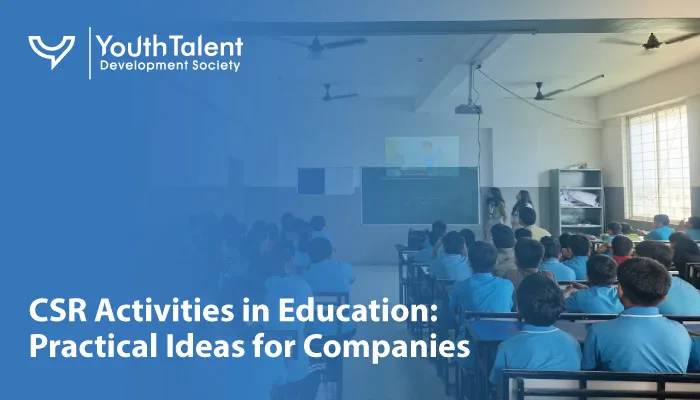
Education is one of the strongest areas for corporate social responsibility in India because it creates long-term impact. A well-planned education CSR program can support students, strengthen schools, improve digital access, build employability skills, and create better opportunities for underserved communities.
For companies, CSR activities in education are not limited to donating books or school bags. Today, effective education CSR includes student learning support, digital literacy, cyber safety, financial literacy, career guidance, teacher support, skill development, mentorship, school infrastructure, and measurable learning outcomes.
Under Schedule VII of the Companies Act, 2013, CSR activities may include promoting education, including special education and employment-enhancing vocational skills, especially among children, women, elderly people, differently abled people, and livelihood enhancement projects. This makes education one of the clearest and most relevant CSR focus areas for companies in India.
India’s National CSR Data Portal also explains that the Companies Act, 2013 introduced CSR as a statutory obligation for select companies to take up social welfare projects. For companies that want measurable social impact, education remains a practical and high-value CSR area.
What Are CSR Activities in Education?
CSR activities in education are corporate-supported programs that improve access to learning, quality of education, student development, and future readiness. These activities may be implemented directly by companies or through NGO partners, schools, colleges, community groups, or local institutions.
Examples of CSR activities in education include:
- Student learning support and mentorship
- Digital literacy workshops
- School infrastructure support
- Computer labs and STEM labs
- Cyber safety awareness sessions
- Financial literacy programs
- Career guidance and industry exposure
- Scholarship support
- Teacher training
- Learning material distribution
- Employability and soft-skills workshops
- Community education awareness drives
The goal is not only to help students attend school. The real goal is to help them learn better, become more confident, and prepare for future education, employment, and life skills.
Why Education Is a Strong CSR Focus Area in India
Education creates impact that lasts for years. When a child gains access to better learning, digital skills, confidence, and guidance, the benefit extends to the family and community.
India also has one of the world’s largest school education systems. The UDISE+ 2023–24 report states that India’s school education system includes nearly 14.72 lakh schools, more than 98 lakh teachers, and nearly 24.8 crore students from pre-primary to higher secondary level. This scale shows why education-focused CSR can create meaningful reach when planned properly.
Education CSR is important because it supports:
- Equal learning opportunities
- Digital inclusion
- Career readiness
- Women’s empowerment
- Youth employability
- Community development
- Long-term social mobility
For many underserved students, the challenge is not only access to school. It is also access to consistent learning support, digital tools, guidance, confidence, and exposure to future opportunities.
Learning outcomes also matter. ASER is a nationwide household survey that tracks children’s enrollment and learning outcomes in rural India every year. This makes it an important reference point for understanding why CSR programs should focus not only on school attendance, but also on learning support, student confidence, digital access, and skill-building.
This is why companies should plan education CSR programs that go beyond donation-based activities and focus on long-term student development.
11 Practical Education CSR Projects and Activities for Companies
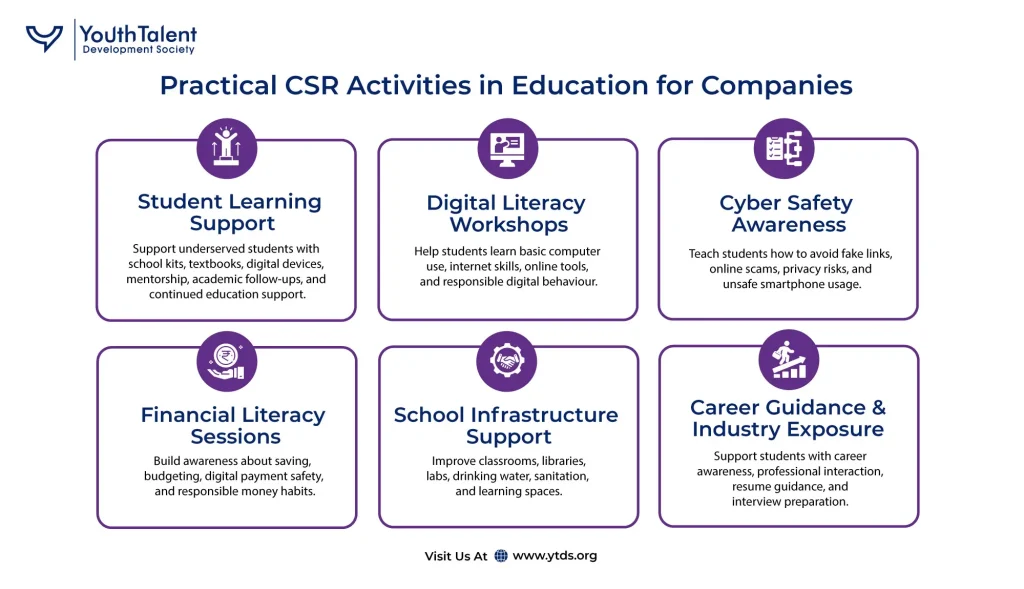
Companies can support education in many ways. The best approach is to select activities based on community needs, student age groups, school readiness, available infrastructure, and measurable outcomes.
1. Student Learning Support and Mentorship Programs
One of the most meaningful CSR activities in education is supporting students who need consistent academic guidance, learning resources, and mentorship. Many underserved students face challenges such as financial pressure, lack of study material, limited digital access, and absence of career guidance.
Companies can support structured student learning programs by funding school kits, textbooks, digital devices, tutoring support, mentoring sessions, and academic follow-ups.
For example, YTDS’s #EachOneTeachOne initiative focuses on supporting underserved students through learning resources, digital access, mentorship, and continued education support. This type of program helps CSR partners move beyond one-time donation drives and create a more stable learning journey for students.
A student support program can include:
- School kits and learning material support
- Digital device or internet access support
- Mentorship sessions
- Academic follow-up
- Career guidance
- Dropout prevention support
- Progress tracking and reporting
2. Digital Literacy Workshops
Digital literacy is now essential for students. Many students use smartphones, but they may not know how to use digital tools for learning, communication, documentation, online safety, and career development.
Companies can support digital literacy workshops covering:
- Basic computer use
- Internet search skills
- Email writing
- Online learning platforms
- Digital payments awareness
- Safe smartphone usage
- Online forms and applications
- Responsible social media behaviour
This type of CSR activity is especially useful for rural and underserved students who may have limited access to computers and guided digital learning.
3. Cyber Safety Awareness for Students
Students are spending more time online for learning, communication, entertainment, and social media. This also increases their exposure to cyberbullying, phishing, fake links, privacy risks, online fraud, and unsafe sharing of personal information.
A cyber safety CSR program can teach students:
- How to create strong passwords
- How to identify fake links
- How to avoid online scams
- How to protect personal information
- How to report cyberbullying
- How to use smartphones responsibly
- How to stay safe while using social media
This activity connects education with real-life safety and responsible technology use.
4. Financial Literacy Sessions
Financial literacy is an important life skill for students. Many young people start using digital payments, bank accounts, mobile wallets, and online transactions before they fully understand money management.
Companies can support financial literacy sessions on:
- Saving habits
- Budgeting basics
- Needs vs wants
- Bank account awareness
- UPI and digital payment safety
- Avoiding online financial fraud
- Responsible borrowing
- Goal-based money planning
This can help students make better decisions as they grow into working adults.
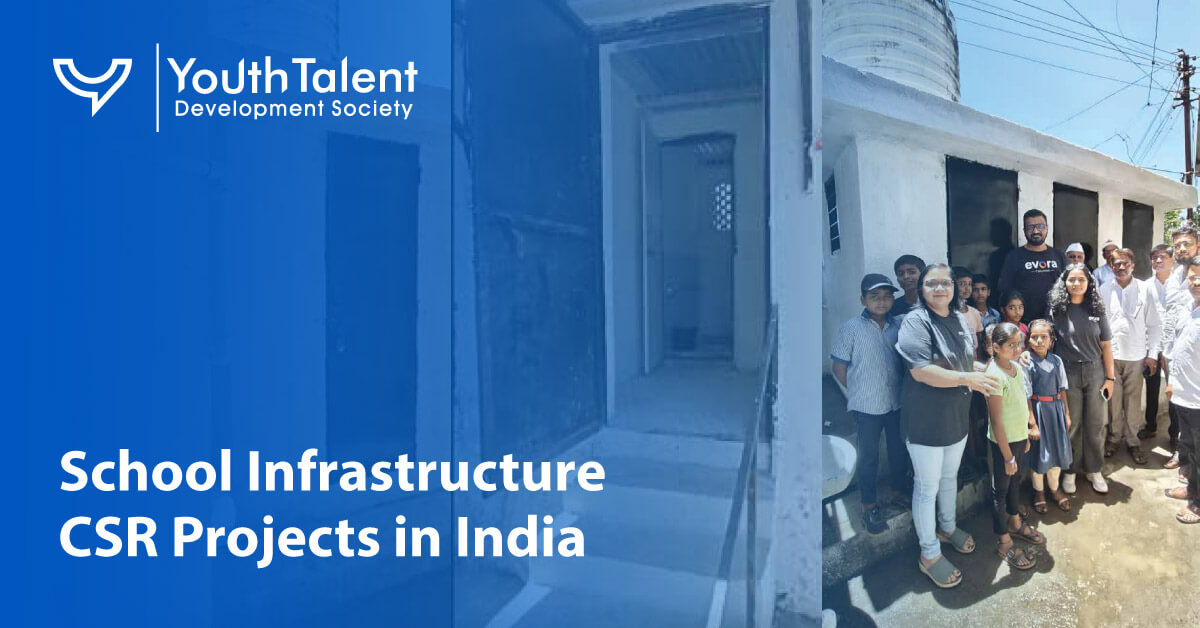
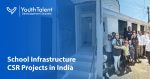
5. School Infrastructure Support
Many schools need basic infrastructure support to improve the learning environment. Infrastructure CSR should be planned carefully so that it solves real school-level problems.
Companies can support:
- Classroom improvement
- Benches and desks
- Drinking water facilities
- Toilets and sanitation support
- Libraries
- Computer rooms
- Science labs
- Smart classroom equipment
- Sports and activity spaces
Infrastructure support works best when it is combined with maintenance planning and school ownership.
6. STEM and Computer Learning Labs
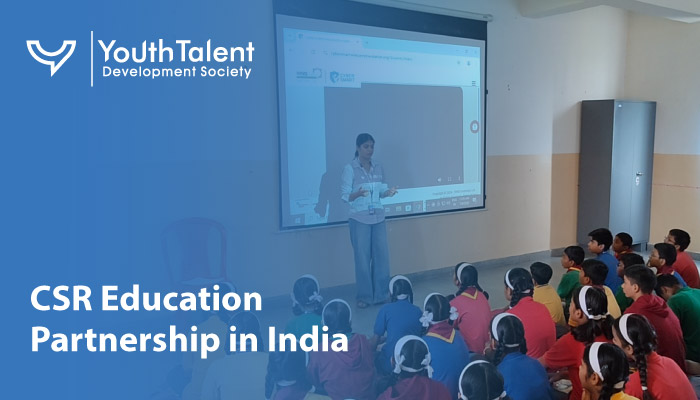
STEM and computer labs can give students hands-on exposure to science, technology, engineering, mathematics, and digital learning.
A company can support:
- Computer labs
- Mobile computer labs
- Science experiment kits
- Robotics or coding exposure
- Digital learning sessions
- Practical project-based learning
- Teacher training for lab usage
This type of CSR activity helps students learn by doing, not only by reading.
7. Career Guidance and Industry Exposure Programs
Many students, especially from underserved communities, do not get enough career exposure. They may not know what courses, jobs, skills, or opportunities are available after school or college.
CSR-supported career guidance programs can include:
- Career awareness sessions
- Industry interaction
- Resume-building workshops
- Interview preparation
- College and course guidance
- Exposure to vocational careers
- Goal-setting activities
- Interaction with working professionals
Industry exposure is useful because students get to understand real career paths, workplace expectations, and the skills needed for future opportunities.
8. Scholarship and Learning Material Support
Scholarships and learning material support can reduce the financial burden on students and families.
Companies can support:
- School fee assistance
- Exam fee support
- Books and notebooks
- Digital devices
- Uniforms
- Study kits
- Transport support
- Online learning subscriptions
However, scholarship programs should have clear eligibility criteria, documentation, and follow-up to ensure the support reaches the right students.
9. Teacher Training and Capacity Building
Teachers play a central role in education quality. CSR programs should not only focus on students but also support teachers with tools, training, and teaching resources.
Teacher capacity-building programs can include:
- Digital teaching tools
- Activity-based learning methods
- Classroom management
- Cyber safety awareness
- Inclusive education practices
- STEM teaching support
- Use of smart classroom tools
Supporting teachers creates a multiplier effect because one trained teacher can benefit many students over time.
10. Employability and Soft-Skills Workshops
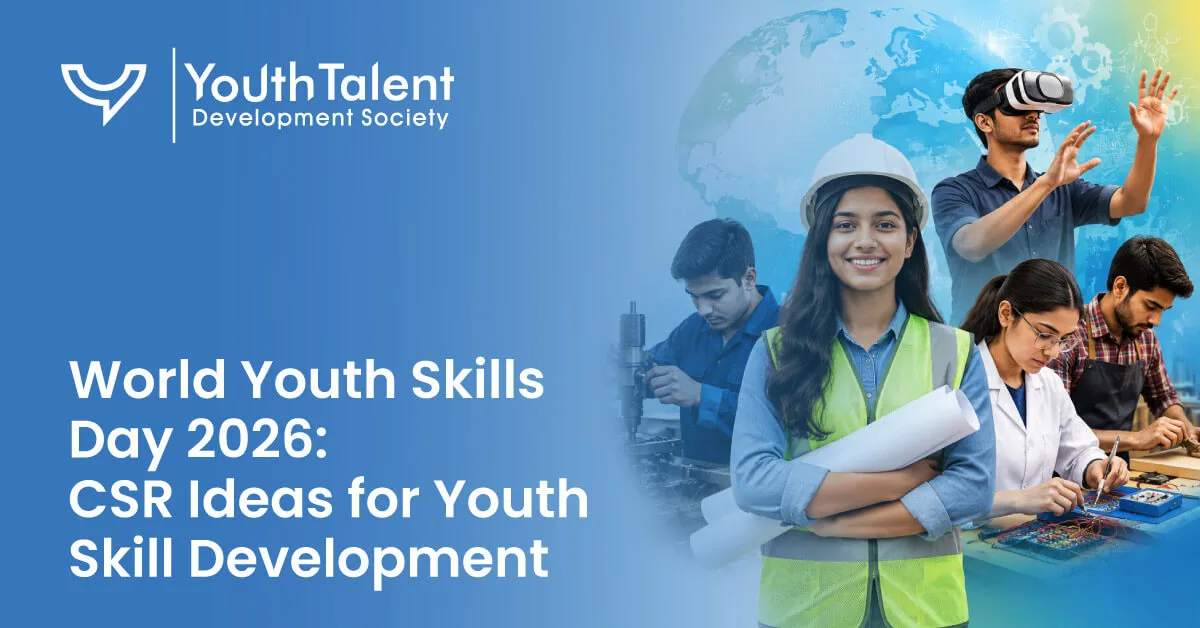
Education should connect with future employability. Students need communication skills, confidence, teamwork, problem-solving, and basic workplace readiness.
CSR programs can support workshops on:
- Communication skills
- Spoken English confidence
- Resume preparation
- Interview practice
- Workplace behaviour
- Time management
- Teamwork
- Leadership
- Problem-solving
This is useful for senior school students, college students, and youth preparing for employment.
11. Community Education Awareness Drives
Education outcomes improve when families and communities are involved. Companies can support awareness drives that encourage parents and communities to value education, digital safety, girls’ education, and skill development.
Community awareness topics can include:
- Importance of school attendance
- Digital safety for children
- Financial literacy for families
- Girls’ education
- Career planning
- Skill development
- Health, hygiene, and safety
This helps build a supportive environment around students.
CSR Activities in Education for Rural and Underserved Students
CSR activities in education become more meaningful when they reach students who face barriers to learning. Rural and underserved students may struggle with limited digital access, lack of career exposure, weak infrastructure, financial pressure, and low confidence.
Companies can support these students through practical interventions such as:
- Mobile digital learning labs
- Community-based digital literacy sessions
- School support programs
- Career guidance camps
- Mentorship for first-generation learners
- Girls’ education support
- Financial literacy workshops
- Learning material distribution
- Skill development sessions
The National CSR Data Portal is an MCA initiative that disseminates CSR-related data and information filed by companies, which can help CSR teams understand where funds are going and how CSR activities are being reported.
This shows why companies should choose implementation partners carefully and focus on proper documentation, reporting, and follow-up.
How to Choose the Right Education CSR Activity
The right education CSR activity depends on the outcome a company wants to create. Use the following guide to match your CSR objective with a suitable education initiative.
Improve Digital Access
Consider digital literacy programs, computer labs, device access, or basic digital-skills training.
Support Long-Term Learning
Student mentorship, academic support, scholarships, and structured learning programs can provide sustained support.
Improve School Facilities
Infrastructure support can include classroom upgrades, learning spaces, libraries, sanitation, or educational resources.
Prepare Students for Careers
Career guidance, employability workshops, communication training, and soft-skills programs can improve career readiness.
Build Online Safety Awareness
Cyber-safety workshops can help students understand online risks, responsible internet use, fraud awareness, and digital behaviour.
Support Teachers
Teacher training and capacity-building initiatives can strengthen classroom delivery and improve long-term learning outcomes.
Reach Underserved Communities
Community-based and rural education programs can extend learning support to students who have limited access to educational resources.
How Companies Can Measure Education CSR Impact
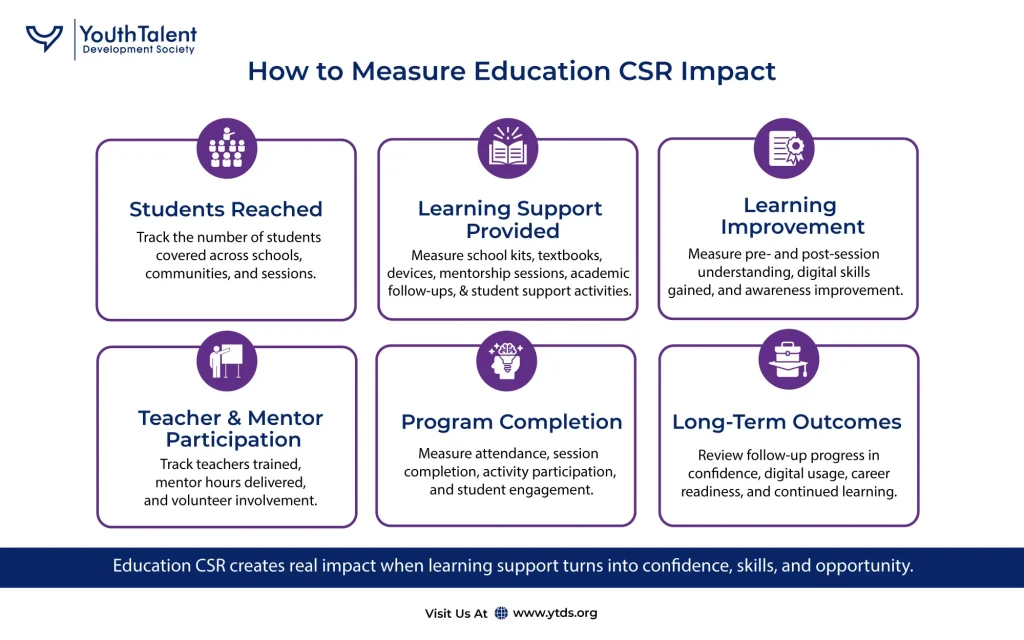
CSR activities in education should be measured beyond the number of items distributed or sessions conducted. Companies should track whether students, teachers, and communities actually benefited from the program.
Useful education CSR impact metrics include:
- Number of students reached
- Number of schools covered
- Attendance rate
- Number of sessions conducted
- Pre- and post-session assessment scores
- Digital skills gained
- Number of teachers trained
- Mentorship hours delivered
- Career guidance participation
- Learning materials distributed
- Student feedback
- Teacher feedback
- Parent or community participation
- Follow-up improvement after 3 to 6 months
For example, a digital literacy workshop can track how many students learned to use email, online forms, digital payments safely, or basic computer tools. A career guidance program can track how many students created resumes, attended mock interviews, or selected a career pathway.
Working With an NGO for Education CSR
Companies can work with experienced NGO partners to coordinate with schools, implement education programs, manage on-ground activities, document outcomes, and support CSR reporting.
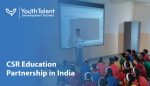
For companies planning a structured CSR education partnership, choosing the right implementation partner and defining responsibilities early can help improve execution and long-term impact.
How YTDS Can Support CSR Activities in Education
Youth Talent Development Society works across Environment, Empowerment, Education, and Employment. Through community-led initiatives and youth-focused programs, YTDS supports practical development activities that create measurable social impact.
For education CSR programs, YTDS can support companies with:
- Student learning support programs
- Digital literacy workshops
- Cyber safety awareness for students
- Financial literacy sessions
- Student mentoring
- School kit and learning resource support
- Digital device donation and access support
- Career guidance programs
- Youth skill development sessions
- Program documentation and impact reporting
Through initiatives like #EachOneTeachOne, YTDS helps companies move from simple donation-based CSR to structured education programs that support students throughout their learning journey.
Conclusion
CSR activities in education can create long-term social impact when they are planned with clear goals, strong implementation, and measurable outcomes. Companies can support students not only through books and infrastructure, but also through learning support, digital literacy, cyber safety, financial literacy, mentorship, career guidance, teacher support, and employability training.
Education CSR is powerful because it prepares young people for the future. It improves confidence, access, awareness, and opportunity.
By working with NGOs like YTDS, companies can turn education CSR budgets into programs that reach students, strengthen communities, and create lasting impact.
Partner with YTDS to design and execute education CSR programs that build confident, digitally aware, and future-ready students.
FAQs
1. What are CSR activities in education?
CSR activities in education are company-supported programs that improve learning access, school infrastructure, digital literacy, student development, teacher training, career guidance, and future readiness.
2. What are examples of CSR activities in education in India?
Examples include student learning support, digital literacy workshops, cyber safety sessions, financial literacy programs, school infrastructure support, scholarships, STEM labs, career guidance, teacher training, and learning material support.
3. Why should companies invest in education CSR?
Companies should invest in education CSR because it creates long-term social impact, supports youth development, improves employability, promotes digital inclusion, and strengthens communities.
4. How can companies measure education CSR impact?
Companies can measure impact through students reached, schools covered, attendance, learning outcomes, digital skills gained, teacher participation, mentorship hours, feedback, and follow-up progress.
What are the best education CSR projects for companies in India?
Companies can support education through digital literacy programs, school infrastructure development, student mentorship, career guidance, STEM initiatives, cyber-safety awareness, teacher capacity building, scholarships, and community-based education programs. The right project should be selected based on the target beneficiaries, company CSR objectives, available resources, and measurable outcomes.
6. What CSR activities can companies do for students?
Companies can run student learning support programs, digital literacy sessions, financial literacy workshops, career guidance programs, cyber safety awareness, scholarship support, mentorship programs, computer labs, and soft-skills training.